Skin papillomas are benign, wart-like growths caused by the canine papillomavirus, usually appearing on the lips, eyelids, or mouth. Most resolve naturally within 1 to 5 months as a dog’s immune system clears the virus, but grooming needs to be adjusted to avoid irritating or spreading them in the meantime.
I remember a client’s young Labrador, Ziggy, coming in for grooming with a cluster of small, cauliflower-like bumps around his mouth. His owner was alarmed, she’d never seen anything like it. A closer look confirmed papillomas, benign warts caused by a common virus, not dangerous, but something that meant adjusting how I handled his session that day.
This kind of moment is common. The growths look unusual, almost concerning, and it’s natural to assume the worst. In most cases, though, they’re harmless and just need a little extra care during grooming to avoid irritation or spreading them further, the same approach I took with Ziggy until his warts cleared on their own a few months later.
This article covers how to care for dogs with papillomas, safe grooming techniques, and when veterinary treatment becomes necessary.
Understanding Skin Papillomas in Dogs
Before adjusting grooming routines, it helps to understand what papillomas actually are:
- Cause: The canine papillomavirus, typically spread through direct contact with an infected dog.
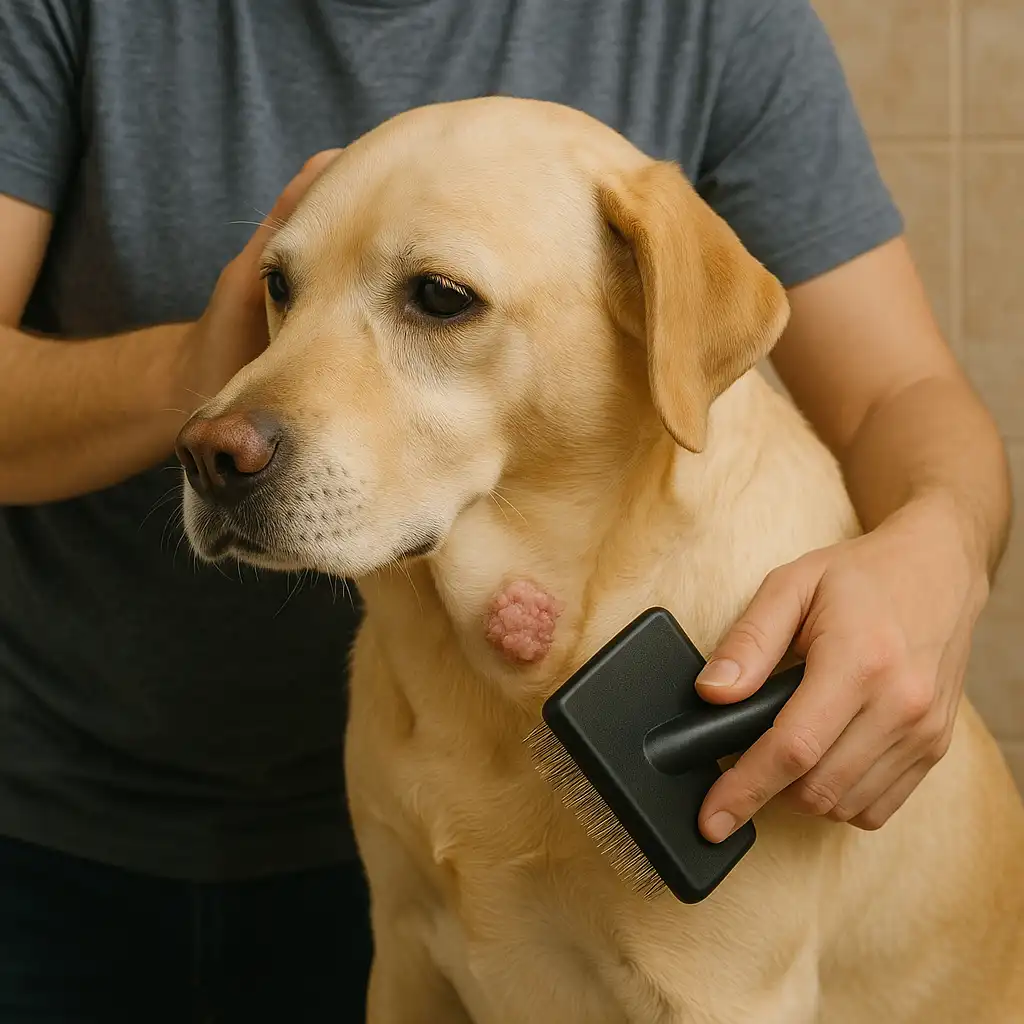
- Appearance: Small, rough, wart-like growths that can appear singly or in clusters.
- Age factor: Puppies and older dogs are more vulnerable due to weaker immune systems.
- Prognosis: Most papillomas resolve naturally within 1–5 months as the dog’s immune system develops a response to the virus.
Why Grooming Needs Extra Care
Routine grooming can accidentally irritate papillomas if not handled carefully. Clippers, brushes, or even shampoo can:
- Tear or damage the papilloma, leading to bleeding
- Spread the virus to other areas of skin
- Cause secondary infection if hygiene during grooming is poor
This is why a slightly adjusted, more careful grooming approach matters while papillomas are present.
Safe Grooming Techniques for Dogs With Papillomas
1. Gentle Brushing
- Use a soft-bristle brush.
- Avoid brushing directly over papillomas.
- Detangle surrounding fur carefully to avoid pulling near the growths.
2. Bathing Adjustments
- Choose mild, hypoallergenic shampoos.
- Lather gently rather than scrubbing.
- Rinse thoroughly to avoid leaving residue that could irritate the growths.
3. Trimming Fur Around Papillomas
- Use round-tipped scissors instead of clippers near growths.
- Leave enough surrounding fur to protect sensitive areas.
- If papillomas are near the eyes or mouth, it’s best to consult a groomer or vet for trimming rather than attempting it yourself.
4. Hygiene During Grooming
- Disinfect grooming tools before and after each use.
- Wear gloves to avoid spreading the virus to other pets.
- Wash your dog’s bedding regularly.
Professional Grooming Support
If handling papillomas at home feels uncertain, professional grooming offers a safer alternative. Pet Grooming in Abu Dhabi salons use specialized tools and trained staff experienced with sensitive skin conditions, helping ensure papillomas aren’t accidentally damaged during a routine groom.
Grooming and Health Monitoring
While grooming, keep an eye on whether papillomas are growing, changing color, or bleeding. If they show signs of infection or last longer than expected, it’s worth getting veterinary advice. Dog Grooming in Abu Dhabi sessions don’t just maintain coat health trained groomers often notice unusual changes and can flag them to pet parents during routine appointments.
Convenient Grooming at Home
For dogs that get stressed during salon visits, Mobile Grooming in Dubai offers professional grooming right at home. This reduces exposure to other dogs, limiting the chance of viral spread, and allows papillomas to be handled in a calmer, more familiar setting.
When Veterinary Treatment Is Necessary
Most papillomas resolve on their own, but some cases need medical attention:
- Persistent growths lasting over 6 months
- Painful papillomas near the eyes, mouth, or paws
- Frequent bleeding or signs of infection
- Interference with eating, walking, or grooming
In these cases, a vet may recommend topical treatment, cryotherapy (freezing), or surgical removal for more severe growths.
Role of Medications
If a papilloma becomes infected, a vet may prescribe antibiotics to manage the bacterial complication. These don’t cure the papillomavirus itself, but they play an important role in treating secondary infections that can develop if a papilloma is scratched or injured.
Preventive Measures
While papillomas can’t always be avoided, a few habits help reduce risk:
- Keep your dog’s immune system strong with a balanced diet.
- Limit contact with dogs known to have active papillomas.
- Maintain good hygiene for grooming tools and shared spaces.
- Schedule regular veterinary check-ups.
Frequently Asked Questions
Are skin papillomas in dogs contagious to other dogs?
Yes, the canine papillomavirus spreads through direct contact, so it’s best to limit close contact with other dogs, especially puppies or dogs with weaker immune systems, until the papillomas resolve.
Can I remove my dog’s papillomas at home?
No, papillomas shouldn’t be removed at home. Attempting removal can cause bleeding, infection, or spread the virus to other areas. Leave removal to a vet if it becomes necessary.
Are papillomas painful for dogs?
Most papillomas aren’t painful unless they’re located somewhere that gets irritated frequently, like near the mouth or paws, or become infected.
How long do dog papillomas typically last?
Most resolve within 1–5 months as the immune system clears the virus. Growths lasting longer than 6 months are usually worth a vet check.
Conclusion
Caring for a dog with skin papillomas takes a bit of patience, gentle handling, and extra awareness during grooming. Soft brushing techniques, mild shampoos, and professional or mobile grooming support all help keep your dog comfortable while reducing the risk of complications.
When needed, veterinary support and treatments like antibiotics help manage infection and speed up recovery. With the right approach, most dogs get through papillomas naturally and return to their normal grooming routine without lasting concerns.