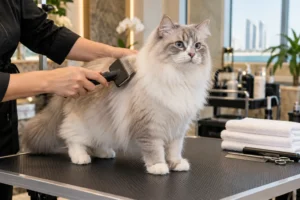

A client walked into our Al Reef salon last month carrying what looked, at first glance, like a small lynx. It was actually Bruno, a two-year-old Maine Coon, tufted ears and all, weighing in at a solid seven kilos. His owner had moved to Abu Dhabi from Toronto six months earlier and was completely unprepared for what the UAE heat was doing to his coat mats forming behind the ears, a dull, heavy undercoat that never seemed to thin out, and a cat who had started avoiding brushing altogether because it had become uncomfortable.
Bruno isn’t unusual. Maine Coons are one of the most striking breeds to own, but their long, dense coats can require extra attention in Abu Dhabi’s climate. For owners looking for pet grooming in Abu Dhabi, understanding how to manage that coat properly is just as important as keeping it looking beautiful.
If you share your home with a Maine Coon in Abu Dhabi, here’s what actually matters for keeping that coat healthy, comfortable, and easier to manage.
Why Maine Coons Need a Different Grooming Approach
Maine Coons were bred in the cold northeastern United States, which is exactly why their coat is so distinctive: a dense, water-resistant undercoat beneath long, silky guard hairs, built to insulate against snow and freezing temperatures. That same coat, in Abu Dhabi’s climate, works against them. Instead of shedding it seasonally the way it would in a temperate environment, the undercoat often gets confused by the region’s near-constant warmth and air-conditioned indoor living, leading to slower, less predictable shedding cycles and a higher risk of matting.
This is the single biggest thing new Maine Coon owners in the UAE get wrong: treating the coat the way they would back home, on a seasonal schedule, instead of adapting to local conditions.
The Coat, Explained
Maine Coon fur isn’t uniform across the body, which is part of why it mats unevenly:
- Neck and chest (“ruff”): Longest hair, prone to tangling around the collar area
- Belly: Softer, finer fur that mats quickly if not brushed regularly
- Behind the ears and legs (“britches”): High-friction zones where mats form fastest
- Tail: Full and plume-like, needs separate attention from the body coat
Because the texture changes so much across the body, a single brushing technique rarely works everywhere which is one of the most common mistakes we see.
A Realistic Grooming Schedule for Abu Dhabi
| Task | Recommended Frequency | Why It Matters Here |
|---|---|---|
| Brushing | 3–4 times per week | AC-driven dry air increases static and tangling |
| Bathing | Every 4–6 weeks | Helps manage undercoat buildup in heat |
| Professional grooming | Every 6–8 weeks | Removes deep mats brushing alone can’t reach |
| Nail trims | Every 3–4 weeks | Indoor-only cats wear nails down less naturally |
| Ear checks | Weekly | Tufted ears trap dust and warm-climate debris |
This is noticeably more frequent than the every-few-months routine many Maine Coon owners are used to in cooler climates, and it’s the main adjustment we walk new clients through.
The Matting Problem Nobody Warns You About
Because Maine Coons’ guard hairs are long but their undercoat is dense, mats often form invisibly close to the skin before they’re ever visible on the surface. By the time an owner notices a mat, it may already be tight against the skin, which is uncomfortable and, in some cases, can restrict movement or trap moisture that leads to skin irritation. This is different from the more visible over-grooming pattern some cats develop, which we covered in our guide on why cats over-groom and how to reduce excessive licking, Maine Coon matting is a coat-management issue, not usually a behavioral one.
Callout: Never attempt to cut out a large mat yourself with scissors. Maine Coon skin is thin and mats sit closer to it than owners expect this is one of the most common reasons cats end up needing emergency vet visits for accidental cuts.
Hairballs: More Common Than You’d Expect
Given how much fur a Maine Coon carries and how thoroughly they self-groom, hairballs are a frequent complaint among owners of the breed. Regular brushing significantly reduces how much loose fur your cat ingests during self-grooming. If Bruno’s story sounds familiar, our post on why cats get so many hairballs breaks down the connection between coat maintenance and how often this happens.
Face and Ear Care
Maine Coons’ tufted ears and full facial ruff need more targeted attention than short-haired breeds. Dust, especially during Abu Dhabi’s sandier months, tends to collect in the ear tufts and around the eyes. A gentle weekly wipe-down prevents build-up before it becomes irritation.
Skin Health Beneath All That Fur
Because the coat is so dense, skin issues on a Maine Coon can go unnoticed longer than on a short-haired cat. If you notice your cat scratching more than usual, or spot small scabs when brushing, it’s worth ruling out parasites or fungal issues early.
Should You Ever Shave a Maine Coon?
This comes up constantly in Abu Dhabi, where the instinct is understandable: it’s hot, the coat is heavy, why not shave it down? In most cases, we recommend against a full shave. The coat plays a role in regulating body temperature and protecting skin from sun exposure, even indoors near windows. A “lion cut,” done by an experienced professional groomer, can help manage severe matting without leaving skin fully exposed, but it should be a targeted solution, not a routine summer haircut.
Getting Professional Help in Abu Dhabi
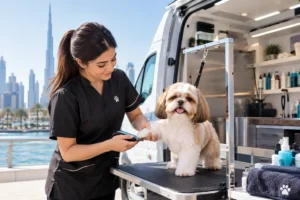
Maine Coons genuinely benefit from a professional groomer’s hands on their coat every 6–8 weeks, even with a solid home brushing routine. At Nin9 Tails, we work with the breed’s coat structure specifically, checking for hidden mats close to the skin, managing the undercoat safely, and keeping ears and paws in good condition. For owners who find it hard to get a large, sometimes stubborn Maine Coon into a carrier, our mobile grooming service in abu dhabi brings the same routine directly to your home across Abu Dhabi.
Conclusion
A Maine Coon’s coat is one of the breed’s defining features, but in a climate like Abu Dhabi’s, it needs a routine built around local conditions, not the seasonal rhythm the breed evolved for. More frequent brushing, closer attention to hidden matting, and regular professional grooming sessions make the difference between a cat that carries its coat comfortably and one that starts avoiding grooming altogether, the way Bruno did before his owner adjusted the routine. Once the schedule fits the climate, most owners find their Maine Coon’s coat becomes far easier to manage than they expected.
Frequently Asked Questions
How often should I brush my Maine Coon in Abu Dhabi’s climate?
Aim for 3 to 4 times a week. The dry, air-conditioned indoor environment increases static and tangling compared to cooler, more humid climates.
Is it safe to shave a Maine Coon for the summer?
A full shave usually isn’t recommended, since the coat helps regulate temperature and protect skin. A professional “lion cut” for severe matting is a more targeted alternative.
Why does my Maine Coon get mats even though I brush regularly?
Mats often form close to the skin, under the visible topcoat, especially behind the ears, under the legs, and around the belly. These areas need separate attention beyond general brushing.
Do Maine Coons need more baths than other cat breeds?
Generally yes. Bathing every 4 to 6 weeks helps manage undercoat buildup, particularly in a warm climate where natural shedding patterns are disrupted.
Are hairballs more common in Maine Coons?
Yes, due to the sheer volume of fur they ingest while self-grooming. Regular brushing is the most effective way to reduce how often this happens.
When should I bring in a professional groomer instead of handling it at home?
If you notice a mat close to the skin, matting that resists gentle brushing, or your cat becoming reluctant during grooming, it’s time for a professional session rather than attempting it at home.