
It usually starts small. A cat scratching a little more than usual, or chewing at the base of its tail during a nap. A few days later, tiny dark specks show up in its fur that weren’t there before. By the time most Dubai cat owners notice, the fleas have already had a head start.
Fleas thrive year-round in Dubai’s warm climate, and most cat owners don’t spot the problem until it’s already escalated. Obsessive scratching, patchy fur loss, and restlessness are all early signs of a cat flea infestation, and catching them quickly can save your cat weeks of itching and skin inflammation.
Quick answer: The earliest signs of fleas in cats are obsessive scratching, small dark “flea dirt” specks in the coat, and restlessness or agitation. If you spot these, a professional flea bath and comb-out combined with a vet-prescribed spot-on treatment is the most effective response. Home remedies like essential oils or dish soap are often ineffective or unsafe for cats.
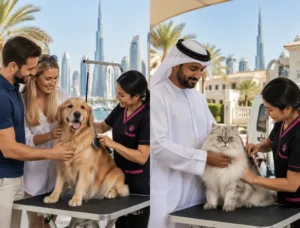
At Nin9 Tails, our mobile pet grooming in Dubai tackle flea concerns right at your doorstep, no car rides, no waiting rooms, no cross-contamination risk. Our certified groomers use vet-approved, cat-safe anti-flea shampoos and precision flea combs to remove adult fleas, flea dirt, and flea eggs in a single session.
Spotted dark specks in your cat’s coat or unusual scratching? Don’t wait. Our mobile cat grooming in Dubai brings expert flea inspection and treatment directly to your home.
What Are Cat Fleas? A Quick Overview
Cat fleas (Ctenocephalides felis) are tiny, wingless parasites that feed on your cat’s blood. Despite their name, they also infest dogs, rabbits, and occasionally humans. An adult flea can jump up to 150 times its own body length, making it incredibly easy for these insects to hop from outdoor environments, other pets, or even your clothing onto your cat’s fur.
A single female flea lays up to 50 eggs per day. Those eggs fall off your cat and land on bedding, carpets, and furniture, creating a wider household infestation within days. This rapid reproductive cycle is why prompt identification and the right flea removal treatment for cats is so critical.
10 Clear Signs Your Cat Has Fleas
1. Excessive Scratching, Biting, and Licking
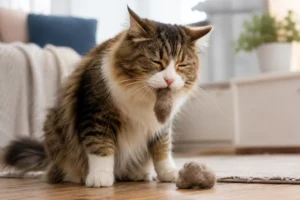
The most immediate and obvious symptom of a flea infestation is relentless scratching. If your cat is constantly biting at its skin, clawing at its neck, or licking its lower back and tail base more than usual, fleas are a primary suspect. The flea’s saliva triggers an intense allergic reaction in many cats a condition known as flea allergy dermatitis (FAD) causing severe itching even from just one or two flea bites.
2. Flea Dirt (Black Specks) in the Coat
“Flea dirt” is the term for flea faeces, which looks like tiny black or dark reddish-brown specks scattered through your cat’s fur. This is one of the most reliable early indicators of infestation. To confirm it’s flea dirt and not ordinary dust, place the specks on a damp white tissue if they dissolve into a reddish-brown colour, that’s digested blood, confirming flea activity.
3. Visible Fleas Moving Through the Fur
Adult fleas are about 1–3 mm long, flat, dark brown, and fast-moving. Part your cat’s fur against its natural direction particularly around the neck, belly, groin, and the base of the tail and look carefully. You may spot fleas scurrying away from light. A fine-toothed flea comb for cats dragged slowly through the coat will often catch adult fleas between the teeth.
4. Hair Loss and Bald Patches
Persistent scratching and over-grooming from flea irritation leads to alopecia (hair loss) in cats. Bald patches typically appear around the tail base, inner thighs, abdomen, and neck. In cats with flea allergy dermatitis, hair loss can be extensive even if only a few fleas are present, because the allergic response not the number of fleas drives the severity.
5. Red, Irritated Skin and Hot Spots
Flea bites cause small, raised red bumps on the skin. With repeated scratching and biting, these develop into open sores, scabs, or “hot spots” raw, weeping patches that can become infected with bacteria. Miliary dermatitis, a condition producing tiny crusty scabs across the cat’s back, is strongly associated with flea allergic reactions.
6. Restlessness and Behavioural Changes
A cat suffering from flea irritation becomes noticeably agitated. Watch for sudden biting at the air, frantic rolling on the floor, repeated head shaking, or your cat avoiding its usual resting spots (possibly because those spots are now flea hotbeds). Some cats also become unusually aggressive or withdrawn when dealing with the chronic discomfort of a flea infestation.
7. Pale Gums (Anaemia)
In kittens, elderly cats, or cats with heavy infestations, fleas can consume enough blood to cause flea-induced anaemia. Warning signs include pale or white gums (check by gently lifting your cat’s lip), lethargy, weakness, and rapid breathing. This is a veterinary emergency if your cat’s gums look pale, contact your vet immediately alongside arranging professional grooming to eliminate the flea source.
8. Tapeworm Segments in the Stool or Around the Tail
Cats often swallow fleas while grooming themselves. If the ingested flea is carrying tapeworm larvae (Dipylidium caninum), your cat will develop a tapeworm infection. Signs include rice-like white segments around the cat’s anus or in its stool, scooting on the floor, and unexplained weight loss. Tapeworms in cats are a direct secondary consequence of untreated flea infestations.
9. Flea Eggs or Larvae in Bedding and Carpets
Although flea eggs are nearly invisible (they’re tiny white ovals), flea larvae which look like small, pale, worm-like specks can sometimes be seen in pet bedding, along skirting boards, or in carpets. Finding these in your home confirms a full-blown environmental flea infestation that requires both pet treatment and household decontamination.
10. Increased Grooming Followed by Sudden Grooming Cessation
Cats are fastidious self-groomers, but a flea-infested cat will over-groom obsessively at first. However, in severe or chronic cases, some cats actually stop grooming altogether a sign of exhaustion, pain, or depression caused by prolonged parasitic stress. If you notice your cat’s coat becoming dull, matted, or unkempt despite no prior grooming problems, a flea infestation (among other causes) should be investigated.
Why Dubai’s Climate Makes Cats More Vulnerable to Fleas
Dubai’s persistently warm temperatures rarely dropping below 20°C even in winter create ideal year-round conditions for flea survival and reproduction. Fleas thrive in environments between 21°C and 30°C with moderate humidity, which describes much of Dubai’s indoor climate throughout the year, especially in air-conditioned apartments where humidity levels are managed.
Outdoor-access cats and those in multi-pet households face significantly higher exposure risk. Even strictly indoor cats aren’t immune fleas can hitch rides indoors on clothing, shoes, or visiting animals. This is why cat flea prevention in Dubai must be treated as an ongoing, year-round priority rather than a seasonal concern.
How Professional Grooming Delivers the Best Flea Treatment for Cats
Home remedies coconut oil, dish soap baths, DIY flea sprays are widely shared online but are either ineffective, potentially toxic to cats, or both. Many essential oils marketed as “natural flea repellents” (tea tree, eucalyptus, lavender) are in fact toxic to cats and should never be applied to their coats. The safest and most comprehensive approach combines professional grooming with vet-prescribed flea control products.
Here’s exactly what professional grooming at Nin9 Tails delivers:
Thorough Coat Inspection and Flea Assessment
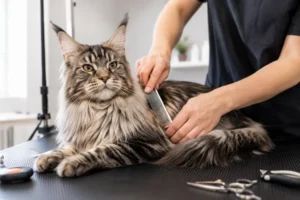
Our certified groomers begin every flea treatment session with a systematic inspection of your cat’s entire coat using a professional-grade flea comb. We check all high-risk zones neck, armpits, groin, tail base and accurately assess the severity of the infestation before proceeding.
Cat-Safe Anti-Flea Bath
We use veterinary-grade, cat-specific anti-flea shampoos that are formulated to kill adult fleas on contact while being completely safe for feline skin. These are categorically different from generic pet shampoos or human products. The bath removes flea dirt, dead fleas, and flea eggs from the coat in a single session, providing immediate itch relief and dramatically reducing the flea load.
Precision Flea Combing
After the bath, we perform a meticulous flea combing session to remove any remaining adults or eggs that survived the wash. This step is painstaking and time-consuming something most cat owners understandably struggle to do properly at home, especially with cats that are already agitated from the infestation.
Coat Drying and Skin Inspection
Our high-velocity, low-heat drying method removes moisture from the coat quickly and comfortably, preventing the damp conditions that remaining fleas prefer. Simultaneously, our groomers inspect the skin for signs of flea allergy dermatitis, hot spots, and secondary infections flagging anything that warrants a veterinary follow-up.
Post-Grooming Advice on Flea Prevention
After every treatment session, our team provides personalised guidance on ongoing cat flea prevention, including advice on vet-prescribed topical spot-on treatments (such as Frontline or Advantage), environmental flea control (vacuuming frequency, washing bedding at high temperatures), and the optimal grooming schedule to keep fleas from returning.
Best Flea Treatments for Cats: What Actually Works
Professional grooming addresses the fleas on your cat’s body but a complete treatment plan also targets the environment. Here’s what the evidence supports:
1. Vet-Prescribed Topical Spot-On Treatments
Monthly topical products applied to the back of the neck (prescription or pharmacy-grade) remain the gold standard for flea prevention for cats. Brands like Frontline Plus, Advantage II, and Revolution target adult fleas, larvae, and flea eggs. Always consult your vet before applying any product.
2. Oral Flea Treatments
Vet-prescribed oral medications such as Comfortis or Bravecto kill adult fleas rapidly (some within 30 minutes of administration) and provide month-long or even three-month protection. These are particularly effective for cats with severe flea allergy dermatitis.
3. Flea Collars
Modern flea collars (such as Seresto) release active ingredients that repel and kill fleas for up to 8 months. They’re a practical supplement not a standalone treatment for cats with ongoing outdoor exposure.
4. Environmental Flea Control
Since up to 95% of a flea infestation lives in the environment (eggs, larvae, and pupae in carpets, bedding, and furniture), household treatment is non-negotiable. Vacuum all surfaces thoroughly and dispose of the bag immediately. Wash all pet bedding at 60°C or higher. Use a household flea spray containing an insect growth regulator (IGR) to interrupt the flea life cycle.
5. Professional Grooming (Flea Bath + Flea Comb)
As described above, professional grooming is the most immediate mechanical intervention available, removing live fleas and flea dirt from the cat’s body in one session and it’s the safest option for cats of all ages, including kittens too young for topical treatments.
When to See a Vet Alongside Grooming
Professional grooming is highly effective at eliminating fleas from your cat’s coat, but certain conditions require veterinary attention in parallel:
- Pale or white gums indicating possible flea-induced anaemia
- Open sores, hot spots, or signs of secondary bacterial skin infection
- Confirmed tapeworm infection (requires oral deworming medication)
- Kittens under 8 weeks (extra care needed with any treatment)
- Cats with pre-existing skin conditions or immune disorders
Our groomers are trained to identify these red flags and will always advise you to seek veterinary care when the signs warrant it.
Frequently Asked Questions
Q: Can indoor cats get fleas?
Yes. Fleas can enter the home on clothing, shoes, or visiting pets. Indoor cats in Dubai are not fully protected without a year-round prevention strategy.
Q: How quickly does a professional flea bath work?
A vet-grade anti-flea shampoo kills adult fleas on contact during the bath. Your cat will experience significant relief within hours. However, re-infestation can occur from environmental fleas, so household treatment must follow.
Q: Is it safe to use a flea shampoo on my cat at home?
Only use products specifically labelled as safe for cats. Never use dog flea products on cats — permethrin, common in dog flea treatments, is acutely toxic to cats. When in doubt, book a professional grooming session.
Q: How often should I get my cat groomed for flea prevention?
For cats with active infestations, an immediate treatment session followed by a follow-up in 2–3 weeks is recommended. For ongoing prevention, monthly grooming is ideal alongside vet-prescribed topical treatments.
Q: Does Nin9 Tails offer flea treatment as part of the mobile grooming service?
Yes. Our mobile grooming van is fully equipped to perform flea baths and flea combing sessions at your home, across Dubai. Contact us to book your appointment.