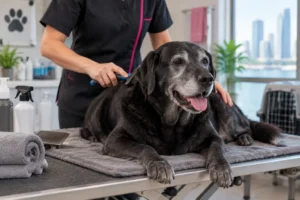

In twenty years of grooming dogs across the UAE, hot spots are one of the most common emergencies I see walk through the door, and also one of the most misunderstood. Just last month, a client brought in her Labrador, Simba, after a weekend at the beach. She was convinced he’d cut himself on something in the sand. What I found instead was a hot spot, a raw, weeping patch behind his ear that had formed in less than a day.
This is something I see constantly during the warmer months, especially with dogs who swim, have thick or double coats, or spend time outdoors in humidity. Owners are often shocked at how fast it develops. One evening their dog is scratching a little more than usual, and by morning there’s an angry, inflamed patch that’s clearly painful.
A hot spot is a fast-spreading patch of inflamed, infected skin caused by a dog licking or scratching one area repeatedly. It’s officially called acute moist dermatitis (also known as pyotraumatic dermatitis), and most cases improve within days once the licking cycle is stopped and the area is treated.
In this guide, I’ll walk you through what I’ve learned from treating and preventing hot spots on grooming tables for years, why they happen, and how to keep your dog comfortable in the UAE’s warm, humid climate. Regular coat maintenance and professional mobile grooming Dubai services can also help identify early skin issues before they become painful infections.
What Are Hot Spots in Dogs?
Hot spots are red, inflamed, and often moist patches of skin that appear quickly and spread fast. The medical name is acute moist dermatitis. They usually start when a dog licks, scratches, or chews one area until the skin becomes raw and infected.
In simple terms, a hot spot is an angry, irritated wound that gets worse the more your dog touches it. They can be painful, smelly, and stressful for both pets and owners. The good news is that with the right care, most hot spots heal well.
Because grooming plays a big role in prevention, many owners trust a professional Pet grooming in Abu Dhabi to keep their dog’s coat clean, dry, and healthy. Regular grooming removes trapped moisture and mats, two of the biggest triggers behind hot spots.
For dogs in Dubai, a routine visit for dog grooming in Dubai helps catch skin problems early, before a small itch turns into a painful flare-up. Skilled groomers often spot trouble that owners miss.
What Causes Hot Spots in Dogs?
Hot spots are caused by anything that makes a dog scratch, lick, or bite one spot repeatedly. Common triggers include:
- Trapped moisture in the coat after swimming, bathing, or humid weather
- Allergies to food, fleas, or the environment
- Flea bites and parasites that cause intense itching
- Matted or dirty fur that holds heat and bacteria
- Ear infections that make dogs scratch nearby skin
- Boredom or stress, leading to excessive licking
- Insect bites or minor skin wounds
In short, an itch starts the cycle, and constant licking turns it into a hot spot within hours.
What Are the Symptoms of Hot Spots?
Hot spots are easy to recognize once you know the signs. Watch for:
- A red, inflamed patch of skin
- Moist, oozing, or crusty surface
- Hair loss around the affected area
- Constant licking, biting, or scratching
- A bad smell coming from the spot
- Pain or sensitivity when touched
These patches often appear on the head, neck, hips, or base of the tail. Because they spread quickly, early action is important.
Why Are Hot Spots Common in the UAE Climate?
The UAE’s heat and humidity create the perfect conditions for hot spots. When warm, moist air gets trapped under a thick coat, bacteria grow quickly on the skin.
Dogs that swim, get bathed often, or have dense double coats are especially at risk. Add sand, dust, and long indoor hours in air conditioning, and skin irritation becomes even more likely. This is why consistent grooming and proper drying matter so much for dogs living in Dubai and Abu Dhabi.
How Are Hot Spots Treated?
Treatment focuses on stopping the itch, clearing infection, and letting the skin heal. Many cases need help from a vet, especially if the area is large or infected. A typical treatment plan includes:
- Trimming the fur around the spot to expose the skin and allow airflow.
- Cleaning the area gently with a vet-approved antiseptic.
- Applying topical treatment to reduce itching and fight infection.
- Using oral medication like antibiotics or anti-inflammatories if needed.
- Preventing licking with a recovery collar so the skin can heal.
- Treating the cause, such as fleas, allergies, or ear infections.
Never ignore a growing hot spot. Quick treatment prevents pain and stops it from spreading.
How Can You Prevent Hot Spots in Dogs?
Prevention is far easier than treatment, and most of it comes down to good grooming and skin care. Helpful steps include:
- Brush regularly to prevent mats and remove loose fur.
- Dry your dog fully after baths or swimming, especially deep coats.
- Stay on top of flea control with vet-approved products.
- Schedule professional grooming to keep the coat clean and healthy.
- Manage allergies with your vet’s guidance.
- Keep your dog active to reduce stress-related licking.
With these habits, you greatly lower the chance of painful flare-ups all year round.
When Should You See a Vet?
You should see a vet if the hot spot is large, deep, very painful, or spreading fast. The same applies if your dog keeps getting hot spots, since this often points to an underlying allergy or infection that needs proper diagnosis.
A vet can treat the wound and find the real cause, while regular grooming keeps the skin clean and healthy in between. Together, they give your dog the best protection.
Expert Tips: Keeping Your Dog’s Skin Healthy in Dubai
A few smart habits make a big difference in the UAE climate:
- Groom more often in summer when humidity rises.
- Choose breathable, well-maintained coats through regular trimming.
- Check your dog’s skin weekly for redness or irritation.
- Rinse off sand and salt after beach or park visits.
- Use gentle, pet-safe shampoos that won’t dry out the skin.
Consistent care keeps your dog comfortable, cool, and free from painful skin problems.
Frequently Asked Questions
Are hot spots painful for dogs?
Yes. Hot spots are sore, itchy, and sensitive. Dogs often lick or bite them, which makes the pain and irritation worse.
How fast do hot spots spread?
Very fast. A small irritated patch can grow into a large, infected hot spot within just a few hours, so early care is key.
Can grooming prevent hot spots?
Yes. Regular grooming removes mats, trapped moisture, and dirt, which are common triggers. It also helps detect skin problems early.
Do hot spots heal on their own?
Rarely. Without treatment, dogs keep licking the area, which slows healing. Most hot spots need cleaning, medication, and a way to stop licking.
Why does my dog keep getting hot spots?
Repeated hot spots often point to allergies, fleas, or ear infections. A vet can find the cause, while grooming helps prevent flare-ups.
Conclusion
Hot spots in dogs may look alarming, but they are manageable with quick action and good prevention. By spotting the signs early, treating the cause, and keeping your dog well groomed, you can protect their skin from painful flare-ups, even in the UAE’s heat and humidity.
If your dog’s coat needs expert care, book a professional grooming session today and give your pet the clean, healthy, comfortable skin they deserve.