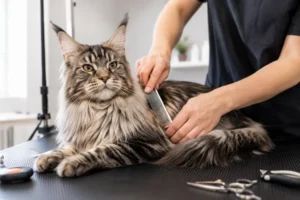

I still remember the first time I tried brushing a client’s cat, Simba, on the grooming table. The moment the toothbrush came near his mouth, he went rigid, ears flattened, and one paw shot out faster than I could react. His owner laughed nervously and said, “See, this is exactly why we never brush his teeth.” That’s a sentence I hear almost weekly.
Here’s what most owners don’t realize: it’s rarely the brushing itself pets are afraid of. It’s the unfamiliarity, the sudden hand near the face, the strange taste, the feeling of being restrained before trust has been built. Once we slowed things down with Simba over a few short sessions, starting with nothing more than a finger near his lips, he went from swatting to tolerating a full brush in under two weeks. That shift is the entire point of this guide.
In my years working in pet grooming in Dubai, teeth brushing comes up as one of the most skipped parts of home care not because owners don’t care, but because the first attempt usually goes badly and nobody tries again. It’s something we see constantly at the grooming table: beautifully kept coats, trimmed nails, clean ears and teeth that haven’t been brushed in months. The good news is that almost any nervous pet can learn to accept brushing with the right pace and the right steps.
Why Pets Resist Teeth Brushing in the First Place
Before jumping into the steps, it helps to understand what is actually happening. Most cats are not reacting to pain they are reacting to a lack of trust. From your pet’s perspective, the whole experience hits at once:
- A hand suddenly moving toward their face without warning
- An unfamiliar bristled object they have never seen before
- A strange taste they have no context for
- The feeling of being held still before any trust has been built
Put all of that together and it is a genuinely overwhelming moment for an animal that has no idea what grooming even is let alone why it is happening to them.
Step 1: Start With Just Touching the Mouth
Skip the toothbrush entirely for the first few days. The only goal here is teaching your pet that a hand near the mouth is safe not cleaning anything yet.
- Touch your pet’s lips and gums gently with a clean finger for just a few seconds
- Reward immediately with a treat or calm praise
- Do this once a day and keep it under 30 seconds
- Stop before your pet shows any sign of resistance always end on a good moment
Step 2: Introduce the Taste of Pet Toothpaste
Once your pet is comfortable with the touch, bring in the toothpaste but not the brush yet.
- Let them lick a small amount of pet toothpaste off your finger
- Never use human toothpaste it often contains xylitol or fluoride, both toxic to pets
- Most pet toothpastes come in poultry or malt flavours, designed to make this step something your pet actually looks forward to
- Repeat for a few days until your pet approaches your finger eagerly instead of hesitating
That shift from tolerating it to anticipating it is the signal to move on.
Step 3: Rub Toothpaste on the Teeth With a Finger
Now combine the two previous steps into one short session.
- Put a small amount of toothpaste on your finger
- Gently rub it along the outer surface of a few front teeth these are the least sensitive area to start with
- Keep the whole session under 30 seconds
- Reward calmly at the end, every time
Step 4: Introduce the Toothbrush Slowly
This is where most owners rush and where most setbacks happen. Bring the brush in slowly, with zero pressure at first.
- Let your pet sniff and lick the brush before it goes anywhere near their teeth
- Use a soft pet-specific toothbrush or a finger brush both work well at this stage
- Touch the brush to the front teeth for just one or two seconds, then stop and reward
- Add a few more teeth each session as your pet stays relaxed never push past their comfort level
Step 5: Build Toward a Full Brushing Routine
Once your pet tolerates the brush across most of their teeth, start refining the technique.
- Use small circular motions along the gumline this is where plaque builds up first and where brushing matters most
- Keep sessions under two minutes
- Aim for three to five times a week rather than one long session
- Always end calmly, with praise or a treat, so the association stays positive
Consistency matters far more than perfection here. Three short, calm sessions a week will do more for your pet’s dental health than one long, stressful one ever will.
When to Pause or Try a Different Approach
Not every session goes smoothly and knowing when to stop is just as important as knowing how to start. Pause and reassess if you notice:
- Your pet becoming highly stressed or shutting down completely
- Any attempt to bite this is a stress signal, not defiance
- Signs of pain rather than simple reluctance, like flinching at light touch
- Sudden new resistance in a pet that was previously improving
Any of these can point to an underlying dental issue like the early tartar buildup we covered in our yellow teeth guide rather than anxiety alone. A vet check is the right next step before continuing.
For pets who never fully adjust to brushing at home, professional cleaning during a grooming session is a valuable backup ensuring dental hygiene does not get skipped altogether. If you are in the UAE and want expert help building this routine or handling the cleaning directly, our team at pet grooming in Dubai works with nervous pets regularly and can guide you through it hands-on.
Conclusion
Simba’s owner sent me a video a few weeks after that first session. Thirty seconds of footage, nothing dramatic — just Simba sitting on the kitchen counter, watching her bring the toothbrush out, and leaning forward to lick the toothpaste off it before she’d even gotten close to his teeth.
She captioned it: “He actually waited for it today.”
That’s the whole journey in one clip. From a paw shooting across the table to a cat who anticipates the routine. It didn’t happen because Simba suddenly decided he liked brushing. It happened because his owner slowed down, removed the pressure, and gave him enough repetitions to understand that nothing bad was coming.
That’s all this process ever is: time, patience, and consistently proving to your pet that the hand near their mouth is a safe one.
If you’ve been putting off teeth brushing because the first attempt went badly, you’re not alone and it’s not too late. Start with step one, stay there as long as your pet needs, and build from there. Most pets get there. Simba certainly did.
And if you ever want a professional hand with the process whether that’s a dental clean during a grooming session or the calm, at-home option of mobile grooming in Dubai our team is always happy to help in person.
Frequently Asked Questions
How long does it take for a nervous pet to get used to teeth brushing?
Most pets adjust within two to four weeks of short, daily sessions, though timelines vary depending on the individual animal’s personality and past experiences.
Can I use human toothpaste on my cat?
No. Human toothpaste often contains xylitol or fluoride, which can be toxic to pets. Always use a toothpaste made specifically for cats.
How often should I brush my pet’s teeth?
Ideally, three to five times a week. Daily brushing is even better if your pet tolerates it well, since plaque can start hardening into tartar within just a day or two.
What if my pet still won’t tolerate brushing after trying these steps?
Some pets need more time or a different tool, like a finger brush or dental wipes instead of a traditional brush. Professional grooming sessions can also help maintain dental hygiene in the meantime.
Is teeth brushing really necessary if I feed dental chews?
Dental chews help, but they don’t replace brushing entirely. Brushing reaches areas chews often miss, particularly along the gumline where tartar builds up first.