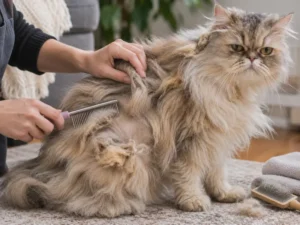

Finding thick knots or clumps in your cat’s coat can be worrying, especially when the fur feels hard or tangled close to the skin. Cat matted fur develops when loose hair becomes trapped and twists together, forming dense knots that normal self-grooming cannot easily remove.
Matting is common in long-haired cats, but short-haired breeds can develop it too. These tangles often appear around the belly, armpits, behind the ears, and hindquarters, where friction and trapped hair make knots more likely.
Small, loose tangles may be manageable with gentle combing, while tight mats can pull on the skin and cause pain. Knowing why mats form, where to look for them, and when professional removal is necessary can help keep your cat comfortable.
Why Does My Cat’s Fur Get Matted?
Cats normally maintain their coats by licking away loose hair and debris. However, self-grooming does not always prevent tangles, particularly in cats with thick coats or difficulty reaching certain areas.
Common causes include:
Shedding and Trapped Loose Fur
During shedding, dead hair can become caught in the surrounding coat instead of falling away. As more hair accumulates, small tangles develop into dense clumps.
Cats with thick undercoats are particularly prone to this problem, especially when loose hair is not removed regularly.
Long or Dense Coats
Persians, Ragdolls, and Maine Coons have long or thick fur that can tangle easily. Their undercoats may trap shed hair beneath the outer coat, making developing mats difficult to notice.
However, even short-haired cats can experience matting when their normal grooming routine changes.
Reduced Self-Grooming
Cats may struggle to maintain their coats because of arthritis, obesity, dental pain, illness, or reduced mobility.
Older cats are particularly susceptible when stiffness makes it difficult to reach their backs, bellies, or hindquarters.
If your cat suddenly develops mats despite previously maintaining a healthy coat, a veterinary examination can help identify possible health problems.
Friction and Movement
Repeated rubbing can twist hair into knots, particularly around the armpits, inner legs, neck, and belly.
Friction from collars, bedding, and everyday movement can gradually turn minor tangles into tighter mats.
Moisture and Coat Buildup
Moisture can tighten existing tangles, while saliva, natural oils, and dirt may contribute to cat fur clumps.
Not every clump is a true mat. Greasy or sticky fur that separates easily may indicate coat buildup rather than tightly tangled hair. If the coat changes suddenly or becomes unusually oily, veterinary advice may be appropriate.
Common Areas Where Cats Develop Matted Fur
Mats often form in places where fur experiences friction or is difficult for cats to groom.
| Area | Why matting occurs |
| Belly | Soft fur tangles through movement, friction, and limited grooming access |
| Armpits | Repeated rubbing when walking or stretching |
| Behind the ears | Fine hair tangles easily, especially in long-haired cats |
| Inner and back legs | Friction and trapped loose undercoat |
| Hindquarters | Dense fur, debris, and difficulty reaching the area |
| Chest and neck | Long fur rubbing against collars or surrounding hair |
These areas deserve extra attention during routine coat checks, even when the visible outer fur looks smooth.
Why Are Cat Belly Mats Difficult to Remove?
Cat belly mats are particularly challenging because the abdominal skin is thin and sensitive. Cats may also resist having their stomachs touched, making it difficult to examine or groom the area safely.
Belly mats can tighten as a cat walks, stretches, or curls up. When they sit close to the skin, even gentle pulling may cause discomfort.
Unlike loose knots on the outer coat, tight belly mats may be difficult to distinguish from the skin underneath.
Never attempt to cut belly mats with household scissors. The skin can become folded into the tangled fur, creating a serious risk of injury.
If the mat feels firm, pulls against the skin, or causes your cat to resist handling, professional removal is the safer option.
How to Tell If Cat Fur Is Tangled or Severely Matted
The safest removal method depends on how tightly the hair is knotted.
| Type | How to recognise it | What to do |
| Loose tangle | Small knot with strands that separate easily | Gentle finger separation and combing |
| Moderate mat | Dense clump that resists combing | Seek grooming assistance if it cannot be loosened without pulling |
| Tight mat | Hard knot close to the skin, often causing discomfort | Professional removal |
| Mat with irritated skin | Redness, swelling, discharge, or pain | Veterinary assessment |
Avoid tugging on a mat to test how firmly it is attached. If you cannot clearly identify the skin beneath it, do not attempt removal at home.
How to Safely Remove Minor Cat Fur Tangles at Home
Small, loose knots may be manageable at home, provided your cat remains comfortable and the fur separates without resistance.
1. Start When Your Cat Is Relaxed
Choose a quiet time when your cat is calm. Allow it to inspect the brush or comb before grooming.
Avoid restraining your cat forcefully, especially when working around the belly or legs.
2. Separate Loose Hair With Your Fingers
Gently loosen the outer strands of a small tangle using your fingertips.
Do not pull the knot away from the skin or continue if the hair feels tightly attached.
3. Use a Cat-Suitable Comb
For minor tangles, a wide-toothed metal comb may help separate the loosened hair.
Begin at the ends of the strands and work gradually toward the base using gentle movements. Stop immediately if the comb catches or causes discomfort.
4. Keep Grooming Sessions Short
Some cats tolerate only a few minutes of brushing. Short sessions, gentle handling, and rewards can make regular grooming easier.
If the tangle cannot be removed comfortably, leave it for a professional.
Important: Never cut mats with household scissors or use forceful brushing. Do not bathe a cat with tight mats in an attempt to loosen them, because wetting tangled fur may make removal more difficult.
When Does Matted Cat Fur Need Professional Removal?
Professional grooming becomes necessary when mats are too tight, extensive, or uncomfortable to separate safely at home.
Seek experienced grooming assistance if:
- Mats are close to the skin or difficult to loosen.
- Several knots have formed around the belly, armpits, or hindquarters.
- Your cat becomes distressed during brushing.
- Tangled fur restricts comfortable movement.
- Matting continues despite regular coat maintenance.
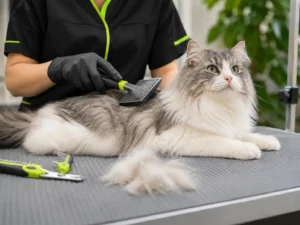
Depending on the severity, a groomer may use gentle detangling techniques or appropriate clippers. Severely matted fur sometimes needs clipping because repeated brushing would cause unnecessary pain.
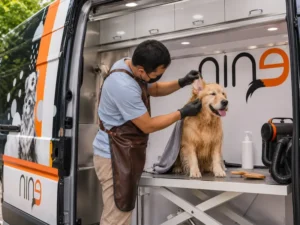
Nin9 Tails provides cat grooming in Abu Dhabi, including coat maintenance and de-matting services. Its mobile grooming setup allows suitable grooming appointments to take place in a purpose-equipped van near your home.
If your cat is nervous about grooming appointments, preparing it beforehand may help. Simple steps such as introducing grooming tools gradually and keeping handling familiar are discussed in this guide to preparing your cat for mobile grooming.
When Is Veterinary Attention Necessary?
Matting is not always just a grooming issue. Tight knots can conceal irritated skin, while sudden changes in coat condition may indicate an underlying health problem.
Arrange veterinary assessment if your cat has:
- Red, swollen, broken, or painful skin beneath mats
- Discharge, moisture, or an unusual odour from the affected area
- Sudden changes in self-grooming
- Difficulty moving, jumping, or reaching certain body parts
- Reduced appetite, lethargy, or other signs of illness
Cats with arthritis, obesity, dental disease, or other medical conditions may struggle to groom themselves effectively. In these cases, removing the mats alone will not address the underlying cause.
A veterinarian can also determine whether severe matting requires medical treatment or supervised removal.
How to Prevent Matted Fur and Recurring Cat Fur Clumps
Consistent coat maintenance helps prevent loose hair from forming painful knots.
Brush According to Coat Type
Long-haired cats often benefit from daily brushing or combing, especially around the belly, legs, and neck.
Short-haired cats may need brushing once or twice weekly, although individual requirements vary with shedding, age, and health.
Use a tool suited to your cat’s coat and avoid excessive pressure.
Check Problem Areas Regularly
Examine the belly, armpits, behind the ears, and hindquarters during routine grooming.
Finding a small tangle early is much easier than managing a large mat once it becomes tightly compacted.
Keep the Coat Clean and Properly Maintained
Remove loose hair regularly and ensure the coat is free of significant tangles before bathing.
Healthy cats generally do not require frequent baths, and bathing alone will not prevent matting.
If your cat has recurring greasy fur, excessive clumping, or unusual skin changes, consult a veterinarian rather than repeatedly washing the coat.
Help Cats That Struggle With Self-Grooming
Senior, overweight, and mobility-impaired cats may need additional grooming assistance.
Focus on gentle coat maintenance while addressing any underlying medical problems with your veterinarian.
Indoor cats can develop mats too, particularly when they have long coats or reduced flexibility. Learn when additional assistance may be appropriate in our article on professional grooming for indoor cats.
Consider Professional Coat Maintenance
Some cats develop recurring tangles despite regular brushing, particularly those with dense undercoats or limited grooming tolerance.
Appropriate mobile pet grooming in Abu Dhabi can help with routine coat maintenance without requiring owners to travel to a grooming facility.
Nin9 Tails’ pet grooming services include brushing and coat-care options that can complement regular home grooming. Professional appointments should be based on your cat’s actual coat condition rather than a fixed schedule.
Final Thoughts
Cat matted fur commonly develops because of trapped loose hair, thick coats, friction, or reduced self-grooming. The belly, armpits, behind the ears, and hindquarters are especially prone to tangles.
Small, loose knots may respond to gentle combing, but tight mats should never be pulled or cut with household scissors. Professional removal is safer when tangles sit close to the skin, while sudden matting accompanied by discomfort or changes in grooming habits deserves veterinary attention.
Regular brushing, early checks of high-friction areas, and appropriate grooming assistance can help prevent recurring mats and keep your cat’s coat comfortable and manageable.
Frequently Asked Questions
Can Short-Haired Cats Get Matted Fur?
Yes. Short-haired cats can develop mats when they shed heavily or have difficulty grooming certain areas. Sudden matting in a previously well-groomed cat may indicate reduced mobility, discomfort, or illness.
Will Matted Cat Fur Fall Out Naturally?
Loose tangled hairs may shed, but established mats usually do not resolve safely on their own. Waiting can allow knots to tighten and pull on the skin, making removal more difficult.
Can I Use Coconut Oil or Conditioner to Loosen Cat Fur Clumps?
Avoid applying household oils or human hair conditioners. Cats may ingest these products while grooming, and some ingredients can irritate their skin. Ask a veterinarian or qualified groomer before using detangling products.
Does Severely Matted Cat Fur Always Need Shaving?
Not always. The appropriate method depends on the size, tightness, and location of the mats. Loose tangles may be combed out, while severe or skin-tight mats may require clipping by an experienced professional or veterinarian.
How Long Does Cat Fur Take to Grow Back After Mat Removal?
Regrowth varies according to coat type, age, health, and how much fur was removed. Some cats show noticeable regrowth within weeks, while full coat recovery can take several months. Contact a veterinarian if the skin looks abnormal or fur fails to regrow as expected.