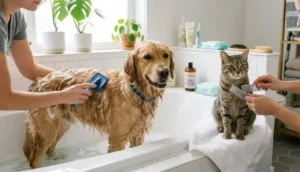

Yes, cats and dogs can use the same shampoo, but only if the product is specifically labeled as safe for both species. Regular dog shampoo may contain ingredients that are harmful to cats, while cat shampoo is not automatically suitable for dogs.
Before sharing shampoo between pets, check the ingredients, age restrictions, and manufacturer’s instructions. Choosing the wrong product can cause skin irritation or, in some cases, serious toxicity.
Can Cats and Dogs Share Shampoo Safely?
Some pet shampoos are formulated for both cats and dogs, while others are intended for only one species.
| Shampoo type | Safe for cats? | Safe for dogs? |
| Cat-specific shampoo | Yes | Only if approved for dogs |
| Dog-specific shampoo | Only if approved for cats | Yes |
| Shampoo labeled for both species | Yes | Yes |
| Human shampoo | Not recommended | Not recommended |
| Baby shampoo | Not recommended | Not recommended |
| Medicated shampoo | Follow veterinary guidance | Follow veterinary guidance |
Age restrictions and product directions still apply to shampoos approved for both species.
Why Are Cat and Dog Shampoos Different?
Although both animals need gentle cleansing, their skin sensitivities, grooming habits, and tolerance to certain ingredients differ.
Skin pH and sensitivity
Cats and dogs have protective skin barriers that help retain moisture and prevent irritation. Their skin generally has a different pH from human skin.
Shampoos with unsuitable formulations may cause dryness, itching, or redness. However, pH alone does not determine safety; the complete formulation matters.
Grooming habits
Cats frequently lick their fur, meaning shampoo residue may be swallowed during grooming. Some ingredients tolerated by dogs can be toxic to cats.
This is why cat shampoos must be carefully formulated and thoroughly rinsed.
Coat requirements
Different coat types require different grooming approaches. Long-haired cats may benefit from suitable conditioning products, while dogs with sensitive skin may require specialized shampoos.
For additional guidance, read our article on how to bathe your dog correctly.
Can You Use Cat Shampoo on a Dog?
If you are wondering, “can i use cat shampoo on my dog”, the answer depends on the product’s formulation.
Some cat shampoos are also suitable for dogs, but you should confirm that the manufacturer approves canine use.
Before applying it, check:
- Whether the label permits use on dogs.
- Age restrictions for puppies and adult dogs.
- Whether the product contains medication or flea-control ingredients.
- Any warnings for sensitive or damaged skin.
If the label does not clearly approve use on dogs, choose a dog-specific product instead.
For routine coat maintenance, professional dog grooming can help ensure appropriate products are used.
Is Human Shampoo Safe for Cats?
No, human shampoo is not recommended for cats. Human hair-care products are designed for human skin and may contain cleansing agents, fragrances, or active ingredients unsuitable for felines.
Pet owners searching “is human shampoo safe for cats” should be aware of possible reactions, including:
- Dry or flaky skin
- Redness and itching
- Excessive scratching or licking
- Skin irritation after bathing
Human medicated shampoos, including certain anti-dandruff products, require additional caution.
Use cat-specific shampoo instead of human hair-care products.
Can You Use Baby Shampoo on Cats?
Baby shampoo may seem suitable because it is marketed as gentle, but it is not formulated specifically for feline skin.
If you are asking “can i use baby shampoo on my cat”, the safest general recommendation is to avoid it unless your veterinarian advises otherwise for a particular product.
Even mild baby shampoos can contain ingredients that irritate cats.
For minor ordinary dirt, wiping the affected area with a soft cloth dampened with lukewarm water may be sufficient. If your cat has been exposed to chemicals or another hazardous substance, consult a veterinarian before attempting to clean the coat.
Shampoo Ingredients That Can Harm Pets
Certain ingredients require special attention, particularly when choosing products for cats.
Permethrin
Permethrin is an insecticide used in some dog flea and tick treatments. It can be extremely toxic to cats and may cause tremors, difficulty walking, and seizures.
Never apply a dog flea-control product to a cat unless it is explicitly approved for feline use.
Essential oils
Tea tree oil and certain other concentrated essential oils can be toxic to cats. Risk depends on the particular oil, concentration, formulation, and exposure.
Natural ingredients are not automatically safe for pets.
Strong fragrances and cleansers
Heavily perfumed shampoos and harsh cleansing ingredients may irritate sensitive skin. Mild, species-appropriate products are generally preferable for routine bathing.
Medicated ingredients
Antifungal, antibacterial, and other medicated shampoos should be used according to veterinary instructions. Products prescribed for one pet should not automatically be shared with another.
What to Do If You Accidentally Use the Wrong Shampoo
If you have used an unsuitable shampoo, take these steps:
- Stop using the product. Do not apply another shampoo to counteract it.
- Check the label. Identify the active ingredients and any species-specific warnings.
- Assess the exposure. If an ordinary shampoo causes mild irritation, thoroughly rinsing with lukewarm water may help. For potentially toxic products, contact a veterinarian immediately for decontamination advice.
- Watch for symptoms. Excessive drooling, vomiting, tremors, weakness, difficulty walking, or seizures require urgent veterinary attention.
- Follow veterinary advice. Do not induce vomiting or try home remedies.
Important: If a cat is exposed to permethrin or another potentially toxic ingredient, seek emergency veterinary advice immediately, even if symptoms have not appeared.
How to Choose Shampoo for Persian Cats
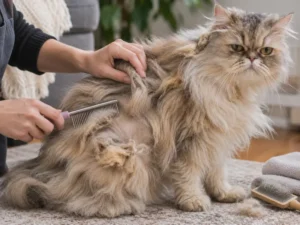
Persian cats have long, dense coats that are prone to tangles and matting. Choosing persian cat shampoo requires attention to both skin safety and coat maintenance.
Look for:
- Cat-approved formulation: Select products specifically labeled for feline use.
- Gentle cleansing: Choose a mild shampoo appropriate for your cat’s skin condition.
- Long-coat compatibility: Products designed for long-haired cats may help maintain coat manageability.
- Suitable conditioning: A cat-safe conditioner may make brushing easier.
- Easy rinsing: Remove shampoo thoroughly to reduce skin irritation and residue ingestion.
Regular brushing remains essential because shampoo cannot prevent all tangles and mats.
Persian coats also require careful drying to prevent moisture from remaining trapped near the skin.
Our guide on Persian cat grooming tips explains brushing techniques, mat prevention, and daily coat maintenance.
How to Choose the Right Shampoo for Both Pets
If you own multiple pets, a shared dog and cat shampoo can be convenient when it is specifically formulated for both species.
Before purchasing, confirm these details:
| What to check | Why it matters |
| Species compatibility | The product must explicitly approve cats and dogs |
| Age suitability | Some shampoos are unsuitable for kittens or puppies |
| Skin condition | Sensitive pets may need specialized formulations |
| Product purpose | Routine and medicated shampoos have different uses |
| Application instructions | Proper dilution, contact time, and rinsing matter |
Pets with recurring skin irritation may need veterinary evaluation rather than frequent shampoo changes.
For pets experiencing recurring itchiness, our article on regular grooming and pet allergies explores the role grooming can play in maintaining a clean, comfortable coat.
Keep Your Pet’s Bathing Routine Safe and Comfortable
Even the right shampoo can cause problems if it is used incorrectly.
Always use comfortable water temperatures, avoid the eyes and ears, rinse thoroughly, and dry your pet appropriately.
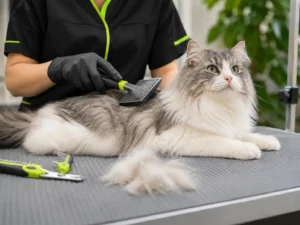
For cats with difficult-to-manage coats, professional cat grooming can help maintain hygiene and manage tangles.
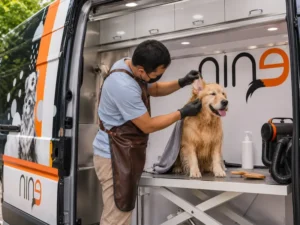
If you have several pets and prefer professional grooming at home, mobile pet grooming in Dubai offers a convenient option for arranging individual grooming sessions.
Inform your groomer about allergies, past shampoo reactions, and any veterinary treatments before the appointment.
Conclusion
Cats and dogs can share shampoo when it is specifically approved for both species. However, dog-only products should not automatically be used on cats, and human or baby shampoo is not recommended as a substitute.
Choose shampoo according to your pet’s age, skin condition, coat type, and the manufacturer’s directions. If you are uncertain about a product’s safety, consult your veterinarian before using it.
Frequently Asked Questions
Can I use dog shampoo on my cat once?
Only if the exact product is approved for cats. Some dog shampoos contain ingredients that are unsuitable or potentially toxic to felines.
Can kittens and puppies use the same shampoo?
Yes, if the product explicitly approves both species and their ages. Check the label carefully because young pets may require special formulations.
Can I bathe my cat without shampoo?
Yes. Light, ordinary dirt can sometimes be removed with a damp cloth. More substantial contamination may require a suitable cleaning product or veterinary advice.
Are waterless shampoos safe for cats and dogs?
Some are suitable for both species, but others are not. Check the ingredients, species approval, and instructions, including precautions against licking.
How often should cats be bathed?
Most healthy adult cats rarely need full baths because they groom themselves. Bathing requirements depend on coat condition, mobility, and medical needs.
Can I use pet conditioner after shampooing?
Yes, provided the conditioner is appropriate for your pet’s species and age. Avoid human conditioners unless specifically recommended by your veterinarian.