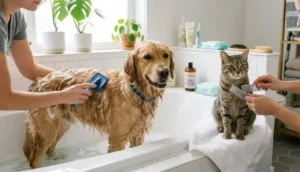

Indoor cats spend much of their time cleaning themselves, so it’s reasonable to wonder whether they need additional grooming. Do indoor cats need professional grooming? Not always. Most healthy, short-haired indoor cats can maintain clean coats through natural self-grooming and regular brushing at home. However, long-haired cats, senior cats, and those with matting or hygiene difficulties may benefit from professional care.
The key is recognizing what your cat can manage independently, what you can safely handle at home, and when extra assistance becomes necessary.
Do Indoor Cats Need Professional Grooming or Is Self-Grooming Enough?
Cats use their rough tongues and paws to remove everyday dirt, loose fur, and debris. This natural behaviour helps maintain coat cleanliness, but it has limitations.
Self-grooming cannot reliably prevent every tangle, shorten overgrown claws, or remove tightly matted fur. Cats with arthritis, obesity, or reduced mobility may also struggle to reach certain areas.
Think of indoor cat grooming as three levels of care:
- Self-grooming: Your cat’s everyday cleaning and coat maintenance.
- At-home grooming: Brushing, nail checks, and gentle hygiene care performed by the owner.
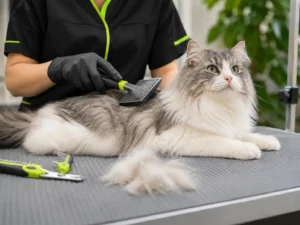
- Professional grooming: Assistance with difficult coat maintenance, suitable hygiene tasks, or grooming your cat cannot comfortably tolerate at home.
A professional appointment should address a specific need rather than automatically include every available treatment.
How Often Should Indoor Cats Be Groomed?
Grooming frequency depends more on coat length, age, health, and individual habits than on whether a cat lives indoors.
| Cat type | Suggested home brushing |
| Short-haired indoor cats | Once or twice weekly |
| Long-haired indoor cats | Daily, or as needed to prevent tangles |
| Senior or overweight cats | More frequent checks and assistance |
| Cats shedding heavily | Additional gentle brushing during shedding periods |
These are starting points, not fixed requirements. A short-haired cat that keeps its coat clean may need very little professional attention, while a long-haired Persian might require regular assistance to prevent matting.
Do Long-Haired Indoor Cats Need More Grooming?
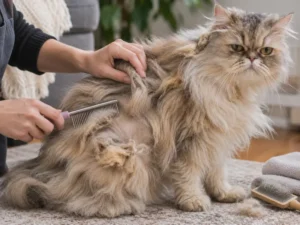
Generally, yes. Long fur tangles more readily, particularly behind the ears, beneath the legs, and around the belly.
Regular combing helps identify knots before they tighten against the skin. If mats become dense, painful, or difficult to separate, avoid cutting them with scissors because feline skin is easily injured.
Professional mobile cat grooming in Dubai may be appropriate when routine brushing is no longer sufficient to manage the coat safely.
Do Indoor Cats Need Baths?
Most healthy indoor cats do not need routine baths. Their natural grooming habits usually handle normal cleanliness.
Bathing may become necessary when a cat has:
- Sticky or heavily soiled fur
- Urine or faecal contamination
- Difficulty cleaning itself
- A veterinary condition requiring prescribed bathing
Use only cat-appropriate products and avoid unnecessary washing, which can irritate sensitive skin.
If your cat has severe matting, unexplained skin irritation, or contamination with potentially toxic substances, seek veterinary advice before attempting a bath.
Do Indoor Cats Need Nail Trimming?
Yes, many indoor cats benefit from regular nail checks and occasional trimming.
Scratching posts support normal claw maintenance, but they do not guarantee that every claw stays at a comfortable length. Older and less-active cats can be particularly vulnerable to overgrown nails.
Check your cat’s nails every couple of weeks. Some indoor cats benefit from trimming approximately every two to four weeks, although individual requirements vary.
Use feline nail clippers and avoid cutting the quick, which contains nerves and blood vessels.
If your cat strongly resists handling, experienced help may be safer than forcing a trim.
Do Indoor Cats Shed and Develop Hairballs?
Yes. Indoor cats can shed throughout the year, even without the seasonal changes experienced by outdoor animals.
During self-grooming, cats swallow loose hair. Some of it passes through the digestive system, while some may be expelled as hairballs.
Regular brushing removes loose fur before your cat swallows it, potentially reducing hairball formation.
For effective everyday maintenance:
- Use a brush appropriate for your cat’s coat.
- Keep brushing sessions short and gentle.
- Pay attention to areas where loose hair accumulates.
- Avoid aggressively pulling through tangles.
Occasional hairballs can occur, but repeated vomiting, reduced appetite, constipation, or lethargy should prompt veterinary attention.
What Grooming Tasks Can You Safely Do at Home?
Most owners can manage basic coat and hygiene care with the right tools and a patient approach.
Brushing and Coat Checks
Brush in the direction of hair growth without pulling. While brushing, look for unusual shedding, redness, lumps, or changes in skin condition.
Using unsuitable equipment or handling techniques can cause discomfort. Understanding common cat grooming mistakes and how to avoid them can help owners establish safer routines.
Ear and Eye Hygiene
Healthy ears generally do not require frequent cleaning.
Check for unusual discharge, redness, odour, or persistent scratching. If necessary, gently wipe visible dirt from the outer ear using a veterinarian-recommended product. Never insert cotton swabs into the ear canal.
Small amounts of ordinary eye discharge can be wiped away carefully with a soft, damp cloth. Persistent tearing, swelling, or coloured discharge needs veterinary assessment.
Nail and Paw Care
Inspect claws, paw pads, and the spaces between toes regularly.
Stop if your cat becomes frightened or uncomfortable. Short, positive sessions are more useful than prolonged restraint.
When Should an Indoor Cat See a Professional Groomer?
Professional help becomes worthwhile when grooming needs exceed what you can manage safely at home.
Common signs include:
- Repeated tangles or developing mats
- Excessive loose fur that is difficult to manage
- Overgrown nails requiring experienced handling
- Persistent hygiene problems around the rear
- Difficulty brushing due to fear or resistance
- Reduced self-grooming associated with age or mobility limitations
Importantly, a sudden decline in grooming, greasy fur, bald patches, painful skin, or unusual odour may indicate a medical issue. A veterinarian should assess these problems before cosmetic grooming is considered.
For cats that need assistance with more than one routine hygiene task, pet grooming in Dubai provides information about available care options. The appropriate services should depend on the cat’s condition and tolerance, not simply the number of treatments offered.
How Can You Make Professional Grooming Less Stressful?
Cats often prefer predictable routines and gentle handling. Introducing unfamiliar grooming procedures suddenly can make them anxious.
Before scheduling an appointment, gradually familiarise your cat with brushing and gentle paw handling. Reward calm behaviour, avoid forcing contact, and tell the groomer about any sensitivities.
Mobile pet grooming in Dubai can offer a convenient option for owners arranging professional care near home, although a mobile appointment is not automatically stress-free for every cat.
Preparing your cat beforehand is equally important. Simple measures, such as practising handling and communicating behavioural concerns, are covered in preparing your cat for mobile grooming.
Final Thoughts
Do indoor cats need professional grooming? Some do, but many can remain clean and comfortable through normal self-grooming and consistent care at home.
The best approach is to monitor your cat’s coat, nails, skin, and grooming behaviour. Brush regularly, address small problems early, and seek professional help when grooming becomes difficult or unsafe.
Most importantly, treat sudden changes in hygiene or coat condition as potential health concerns rather than assuming your cat simply needs another grooming appointment.
Frequently Asked Questions
Can an indoor cat go its entire life without professional grooming?
Yes. Some healthy, short-haired cats maintain their coats successfully with self-grooming and basic owner care throughout their lives.
Should indoor cats have their fur shaved in summer?
Usually not. A healthy coat provides natural protection, and shaving is generally unnecessary unless medically advised or required for safe mat removal.
Is professional grooming necessary for older indoor cats?
Not automatically. However, older cats may need additional assistance if arthritis, reduced flexibility, or illness makes self-grooming difficult.
Should I book a full grooming package for my indoor cat?
Only if your cat needs it. Some cats may only require brushing or nail trimming, while others benefit from professional cat grooming packages based on their coat and hygiene needs.