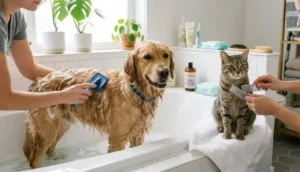

You give your dog a thorough bath, rinse away the shampoo, and dry their coat. Everything seems fresh until a few hours later, or the next morning, when that unpleasant smell returns.
Why does your dog still smell bad after a bath? Common reasons include moisture trapped in the undercoat, leftover shampoo, skin oil buildup, yeast or bacterial infections, and odors coming from the ears, mouth, or anal glands.
The solution depends on the cause. Regular pet grooming in Dubai helps maintain coat hygiene, but persistent odors accompanied by skin irritation or discomfort may need veterinary attention.
Is It Normal for a Dog to Smell After a Bath?
A mild wet-dog smell is normal. Water makes odor-producing compounds from natural skin oils and microorganisms more noticeable, so even a freshly washed dog may have a distinct scent.
This smell should usually fade as the coat dries.
However, a strong, persistent odor isn’t something to ignore, particularly when accompanied by itching, redness, greasy skin, hair loss, or unusual discharge.
Why Does My Dog Smell Bad Even After a Bath? Common Causes
1. Moisture Trapped in the Undercoat
A dog’s outer fur can feel dry while the undercoat remains damp. This is particularly common in thick-coated breeds such as Golden Retrievers, Huskies, and German Shepherds.
Trapped moisture can prolong the wet-dog smell and aggravate existing skin irritation.
What helps: Dry the coat thoroughly with absorbent towels and a suitable dryer on a low-heat setting. Check close to the skin, especially around the chest, neck, and hindquarters.
Dense coats require extra drying time. Learn more about how long mobile pet grooming takes in Dubai and how coat type affects the process.
2. Shampoo Residue and Coat Buildup
Loose undercoat, dirt, dead skin, and natural oils can remain trapped in dense fur. Shampoo that isn’t fully rinsed away may also irritate the skin or leave the coat feeling coated.
What helps: Brush before bathing, use a dog-specific shampoo, and rinse thoroughly until no residue remains. Avoid harsh household cleaning products or human shampoo.
3. Greasy Skin and Seborrhea
If your dog’s coat becomes oily or waxy soon after washing, the problem may involve abnormal skin oil production or skin-cell turnover.
Seborrhea can cause greasy fur, dandruff, scaling, and unpleasant odor. It may occur alongside allergies, hormonal disorders, or infections.
What helps: Persistent greasiness needs veterinary assessment. Depending on the diagnosis, treatment may include appropriate medicated shampoos and management of the underlying condition.
4. Yeast or Bacterial Skin Infections
Yeast dermatitis, commonly associated with Malassezia, can produce a musty odor along with itching, redness, greasy patches, and thickened skin.
Bacterial infections may cause pustules, crusts, hair loss, discharge, or an unpleasant smell.
These problems often affect the paws, armpits, groin, and skin folds, where irritation and moisture can develop.
What helps: A veterinarian may examine a skin sample to identify yeast or bacteria and recommend suitable treatment. Ordinary shampoo may temporarily reduce odor without resolving an infection.
5. Ear Infections
An unpleasant smell around your dog’s head may come from an ear infection rather than the coat.
Watch for frequent head shaking, scratching, redness, discharge, or pain when the ear is touched.
What helps: Have painful or smelly ears examined by a veterinarian. Avoid inserting cotton buds or applying ear products without appropriate guidance.
6. Dental or Anal Gland Problems
Sometimes the smell has nothing to do with your dog’s fur.
Dental disease can cause persistent bad breath, inflamed gums, and difficulty chewing.
Anal gland problems may produce a strong fishy odor, especially when accompanied by scooting or excessive licking around the rear end.
What helps: Dental problems require appropriate oral care and veterinary examination. Recurrent fishy odors or rear-end discomfort also warrant a veterinary assessment.
7. Dirty Bedding and Grooming Accessories
A clean dog can quickly pick up odors from unwashed bedding, collars, blankets, or harnesses.
Outdoor activities, including rolling in muddy or contaminated areas, can also introduce new smells.
What helps: Wash bedding regularly, clean accessories, and check your dog’s coat after outdoor activities.
Why Does My Dog Smell Bad the Next Day After a Bath?
When the smell returns can help narrow down possible causes.
| When the Smell Appears | Possible Cause |
| Immediately after bathing | Wet fur or shampoo residue |
| After the coat seems dry | Trapped moisture or an existing skin problem |
| The following morning | Damp undercoat, oily skin, or dirty bedding |
| Within 1–2 days | Recurring skin conditions or microbial overgrowth |
| After several days | Accumulated oils, dirt, or environmental odors |
These patterns are clues, not a diagnosis. A smell that repeatedly returns despite proper grooming deserves further investigation.
How to Identify Where Your Dog’s Bad Smell Is Coming From
Check your dog gently when the coat is dry.
- Coat and skin: Look for greasiness, dandruff, irritation, or moist patches.
- Ears: Check the visible outer ear for redness or discharge.
- Mouth: Notice persistent bad breath or inflamed gums.
- Paws: Look for redness, swelling, or excessive licking.
- Skin folds: Check for trapped moisture or irritation.
- Rear end: Notice fishy odors, scooting, or discomfort.
- Bedding and accessories: Check whether the odor is coming from your dog’s surroundings.
These observations help locate the problem, but they cannot confirm a medical diagnosis.
How to Get Rid of Dog Smell After a Bath
If your dog has healthy skin and no signs of discomfort, improving the bathing routine may help.
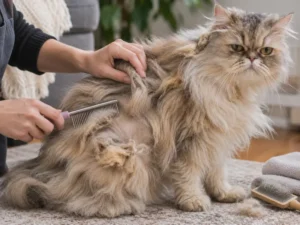
- Brush before bathing: Remove loose hair, dirt, and tangles so shampoo can reach the coat effectively.
- Use suitable dog shampoo: Choose a product appropriate for your dog’s skin and coat.
- Rinse completely: Pay attention to thick areas where shampoo can remain trapped.
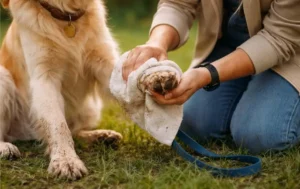
- Dry thoroughly: Use absorbent towels and safe airflow to remove moisture from the undercoat.
- Maintain hygiene: Keep bedding, collars, and grooming accessories clean.
- Avoid excessive bathing: Repeated washing won’t resolve underlying medical causes and may irritate sensitive skin.
If the smell persists despite these measures, consult a veterinarian rather than switching repeatedly between shampoos.
When Should You Take Your Dog to the Vet?
Arrange a veterinary examination if persistent odor occurs alongside:
- Excessive scratching, licking, or hair loss
- Red, greasy, flaky, or thickened skin
- Ear discharge or frequent head shaking
- Persistent bad breath or difficulty eating
- Fishy odor with scooting or rear-end discomfort
- Skin sores, swelling, or unusual discharge
Seek prompt care for painful or rapidly spreading skin lesions, significant swelling, or marked lethargy.
A veterinarian may use skin or ear cytology, dental examination, or other tests to identify the underlying condition.
How Professional Dog Grooming Helps Prevent Odor
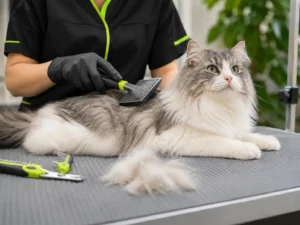
Professional grooming can help remove loose undercoat, accumulated dirt, and product residue while ensuring the coat is rinsed and dried appropriately.
Regular dog grooming in Dubai is particularly useful for dogs with dense coats that are difficult to maintain at home.
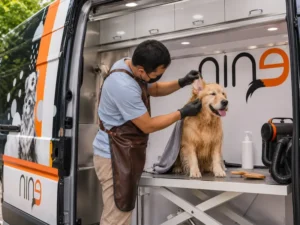
For dogs uncomfortable with salon visits, mobile pet grooming in Dubai provides convenient routine grooming close to home.
Nin9 Tails offers mobile grooming services designed to support coat cleanliness and regular hygiene maintenance.
However, professional grooming doesn’t replace veterinary treatment for infections or other medical conditions.
How to Keep Your Dog Smelling Fresh Between Baths
A consistent grooming routine is more effective than relying on frequent baths.
Brush regularly according to your dog’s coat type, dry the fur after swimming or getting wet, and wash bedding and accessories as needed.
Check the skin, ears, and paws for unusual changes during routine grooming.
The right grooming interval depends on your dog’s breed, activity, coat condition, and health. Our guide on how often dogs need grooming can help you establish a suitable schedule.
Final Thoughts
A dog that smells bad after a bath doesn’t necessarily need another wash. The cause may be incomplete drying, coat buildup, dirty bedding, or an underlying medical condition.
Start by checking the coat and identifying where the odor comes from. Improve routine grooming where appropriate, but seek veterinary advice when the smell persists or appears alongside itching, inflammation, or discomfort.
Proper grooming and timely medical attention are the most effective ways to keep your dog clean, comfortable, and healthy.
Frequently Asked Questions
Why does my dog smell worse when wet?
Water makes odor-producing compounds from natural skin oils and microorganisms more noticeable. The familiar wet-dog smell generally fades as the coat dries completely.
Why does my dog smell like yeast after a bath?
Yeast dermatitis may cause a musty odor alongside itching, redness, or greasy skin. However, smell alone cannot confirm an infection. Veterinary examination and testing may be needed.
Why does my dog smell fishy even after bathing?
A fishy odor may come from anal sac secretions. Persistent odor, scooting, or rear-end discomfort should be assessed by a veterinarian.
Why does my dog’s fur get greasy so quickly?
Rapidly returning oiliness may be associated with seborrhea, allergies, or skin infections. Repeated greasiness despite proper grooming warrants veterinary assessment.
How often should I bathe my dog to prevent bad smells?
Bathing frequency depends on coat type, lifestyle, and skin health. Some dogs need frequent bathing, while others require it less often. Choose a routine suited to your dog’s individual needs.