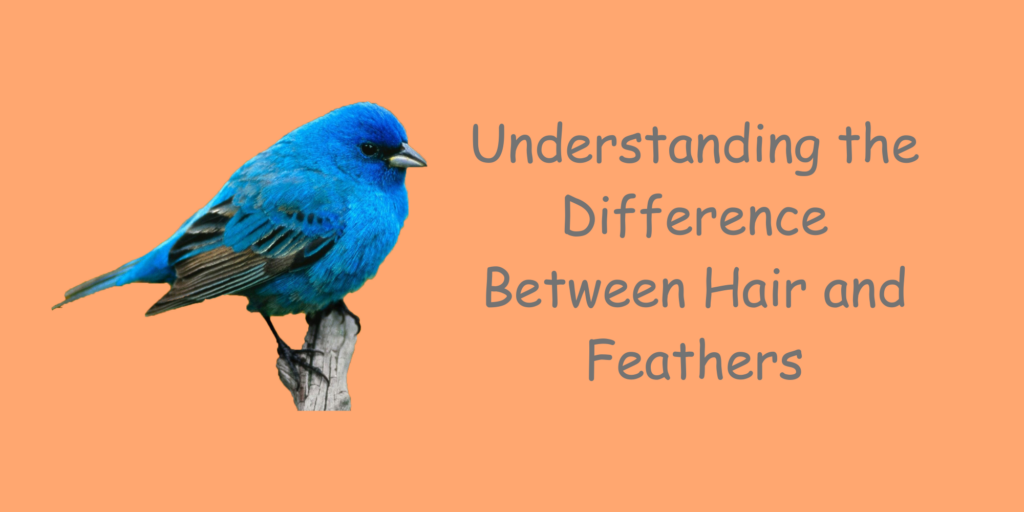
Birds do not have hair because they inherited feathers from their dinosaur ancestors. Hair is a mammalian feature, while feathers developed along a different evolutionary path. A bird may look furry or have strands resembling whiskers, but those structures are feathers rather than mammal hair.
The confusion is understandable. A kiwi has shaggy plumage, and a chick’s soft down can look like fur. To understand the difference, it helps to look at how these coverings are built, what they do, and where they came from.
Do Birds Have Hair, Fur, or Feathers?
Birds have feathers, not hair or fur. Fur is the term commonly used for the coat of hair covering many mammals.
Feathers vary considerably in appearance. Some form the smooth outer covering of a bird, while others are fluffy or resemble fine strands.
That variety explains why a bird can look hairy without growing actual hair. New Zealand’s Department of Conservation, for example, describes the kiwi as having loose, hair-like feathers.
What Is the Difference Between Hair and Feathers?
The clearest difference is their structure. Mammalian hair grows as a strand; many familiar feathers have a central shaft with branches called barbs.
Smaller branches, called barbules, extend from the barbs. On many outer feathers, these connect to form a coordinated surface. Down has a looser arrangement that gives it a fluffy appearance.
| Feature | Mammalian hair and fur | Bird feathers |
|---|---|---|
| Basic structure | Individual strands | Structures ranging from fine filaments to complex branched feathers |
| Typical appearance | Smooth, curly, coarse, or woolly | Smooth, fluffy, bristly, or hair-like |
| Roles | Insulation, protection, sensation, and signalling | Insulation, flight, protection, display, and other specialised roles |
| Replacement | Hair follicles undergo growth and shedding cycles | Feathers are replaced through moulting |
Cornell Lab’s feather guide explains how different feather structures support different functions. A flight feather and a down feather are both feathers, but they are built differently.
Are Hair and Feathers Made of the Same Material?
Both are commonly described as keratin-based structures. However, that does not mean they have identical composition or organisation.
Sharing a broad material category does not make a feather a type of hair. Their development and finished structures differ.
Does Hair Grow Continuously While Feathers Do Not?
An individual hair does not grow indefinitely. Hair follicles cycle through periods of growth and rest before shedding and replacement.
A feather reaches its mature size and is later replaced during moulting. The useful distinction is how these structures grow and renew—not that hair grows forever.
Why Did Birds Evolve Feathers Instead of Hair?
Birds descended from theropod dinosaurs, and feathers were already present in non-bird dinosaurs before the earliest birds appeared.
Birds therefore inherited a feather-bearing evolutionary history. They did not choose feathers because hair was unnecessary.
Fossil evidence also shows that feathers existed before powered flight. Insulation and display are among the proposed early functions, although the earliest stages of feather evolution remain an active research topic.
Did Feathers Evolve Only for Flying?
No. Feathers appeared before bird flight, and modern feathers still serve purposes beyond flight.
This also explains why a flightless bird can have feathers. The kiwi’s hair-like covering is plumage even though the bird cannot fly.
Why Do Some Birds Have Feathers That Look Like Hair?
A feather does not need to resemble the broad, flat feather people usually picture. Some are reduced to slender shafts, while others have loose branches that create a soft or shaggy covering.
Filoplumes: Fine, Hair-Like Feathers
Filoplumes are slender feathers associated with larger feathers. They typically have a thin shaft and a small number of branches near the tip.
They are thought to help birds monitor the position or movement of surrounding plumage through sensory structures near their bases. Their hair-like appearance does not make them mammalian hair.
Bristles: Stiff Feathers Around the Face
Some birds have stiff, bristle-like feathers near their eyes or beaks. These can resemble eyelashes or whiskers.
They are specialised feathers, and their roles vary between species.
Down: Fluffy Feathers That Resemble Fur
Down has a loose structure that traps air close to the body, helping provide insulation. Its soft appearance can make a chick look furry, especially before its outer plumage develops.
Unlike the connected surface of many flight feathers, down remains fluffy.
What Feathers Do Besides Helping Birds Fly
Different feather types perform different jobs:
- Insulation: Down helps retain a layer of warm air.
- Protection: Outer plumage covers the body.
- Display: Colours and patterns can communicate information.
- Water shedding: The structure and condition of plumage help water run off.
- Sensory feedback: Specialised feathers can help birds monitor their plumage.
Not every feather performs every function. A bird’s covering works through several feather types acting together.
Feathers are different from mammalian hair, so a bird’s grooming needs should not follow the same routine as a dog’s or cat’s. Understanding your bird’s species, plumage, and individual requirements is a useful starting point when discussing care.
For owners in the capital, Nin9 Tails’ bird grooming in Abu Dhabi page explains the local service options. Discuss your bird’s requirements before booking, including whether the appointment concerns nail care or another specific grooming need.
You can also explore the wider pet grooming services at Nin9 Tails if you share your home with other pets. Each animal’s care should reflect its species and individual needs.
Frequently Asked Questions
Can any bird grow real hair?
No living bird naturally grows mammalian hair. Structures that look like hair are specialised feathers.
Is a kiwi covered in fur?
No. A kiwi’s shaggy covering consists of loose, hair-like feathers, not fur.
Are the fluffy coverings on baby birds hair?
No. The soft covering is down, a type of feather. Its loose structure creates a fluffy appearance and helps provide insulation.
Are feathers modified hairs?
No. Feathers are not hairs that became wider or branched. They are distinct structures with a different evolutionary and developmental history.
What are the tiny hairs between a bird’s feathers?
Some may be filoplumes: slender feathers associated with larger feathers. Identification depends on their position and structure; not every fine strand is the same feather type.