A few months ago, an owner messaged us barely a week after her puppy came home from the animal hospital beaten but alive after a terrifying bout of parvo. She wanted to book a grooming session. He’d been through so much, she said, and she just wanted him to feel clean, fresh, and cared for again. It’s one of the most understandable requests I ever get, and my heart went out to her. But it’s also one where the kindest, most responsible answer a groomer can give is: not yet.
Parvovirus is one of the most dangerous illnesses a dog can survive. With prompt veterinary care, 70–90% of dogs pull through, but survival is only the first chapter. Recovery leaves the immune system fragile, the body depleted, and crucially the dog still able to spread the virus to others for a while afterward. Grooming is genuinely important for a dog’s hygiene and wellbeing, especially after an illness that leaves the coat dull and the skin neglected. But timing that first groom correctly protects both your dog and every other dog they might come near. Here’s everything you need to know to get it right.
Understanding parvo and what recovery really means
Parvovirus is a highly contagious viral infection that primarily targets the digestive system. It causes severe vomiting, profuse and often bloody diarrhoea, dehydration, lethargy, and a dangerous loss of appetite. It hits puppies and unvaccinated dogs hardest, and without treatment it’s frequently fatal which is exactly why fast veterinary intervention saves lives.
Most dogs that respond well to treatment recover within about 7 to 14 days, though the exact timeline depends on how severe the infection was and how strong the dog was to begin with. But here’s the part owners consistently underestimate: recovery on the outside runs well ahead of recovery on the inside.
Parvovirus doesn’t just damage the gut it suppresses the immune system by attacking the bone marrow, where infection-fighting white blood cells are made. So a dog can look bright, eat normally, and wag its tail again while its immune defences are still rebuilding underneath. During that window, the dog is far more vulnerable to secondary infections than a healthy dog would be. This is the single biggest reason not to rush back into grooming: a stressful session at the wrong moment can tax a system that isn’t ready for it.
When is it safe to groom a dog after parvo?
Four things need to line up before that first post-recovery groom. Skip any one of them and you’re taking an unnecessary risk.
1. Wait at least 3–4 weeks after full recovery
Veterinarians generally advise waiting at least 3 to 4 weeks after your dog has fully recovered not from when treatment started, but from when they were genuinely well again. This gives the immune system real time to rebuild its strength, and it dramatically lowers the risk of a stress-related setback or a secondary infection taking hold. As a happy coincidence, this same window also lines up with when your dog is no longer contagious to other dogs.
2. Get your vet’s clearance first
This one is non-negotiable. Before you book anything, get explicit confirmation from your veterinarian that your dog has fully recovered and is no longer shedding the virus. Your vet knows your dog’s individual case the severity, the complications, the recovery curve far better than any general timeline can.
3. Confirm there are no lingering symptoms
Only groom once your dog has clearly turned the corner: strength and energy back to normal, a healthy appetite, and absolutely no signs of illness. Any return of vomiting, diarrhoea, or lethargy means you stop and call your vet — not your groomer.
4. Insist on a properly sanitised environment
Grooming should take place in a genuinely clean, disinfected space, using tools, towels, and surfaces that have been properly sanitised. And it’s worth knowing why this is such a big deal with parvo specifically: standard soaps and many common cleaners simply don’t kill it. Only a correctly diluted bleach solution (around a 1:30 ratio with water), left in contact for at least ten minutes after all organic material has been removed, reliably destroys the virus. A reputable salon will already follow strict hygiene protocols but it’s fair to ask.
Special grooming care for post-parvo dogs
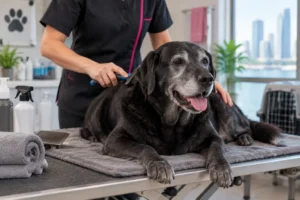
Even once your dog is cleared and ready, that first session shouldn’t look like a normal groom. A dog recovering from parvo has been through a serious ordeal, and the whole experience should be built around gentleness:
- Gentle handling above all: A recently-recovered dog tires quickly and may still be a little anxious after so much time at the vet. Keep stress to an absolute minimum, move slowly, and read their body language.
- Mild, soothing shampoos: Use vet-approved, hypoallergenic, or medicated formulas that clean without stripping the skin. Parvo and dehydration can leave the coat and skin in poor condition, so this is about restoration, not a deep aggressive clean.
- Hydration and rest breaks:Make sure your dog is well-hydrated before and after, and build in pauses so they never get overtired mid-session.
- Short sessions only: This is not the time for a full breed cut or a marathon groom. Keep it brief, calm, and focused on the essentials a gentle bath, light tidying, and comfort.
Keeping other dogs safe
Because parvo is so contagious and so persistent in the environment, protecting other dogs is part of responsible post-parvo grooming not an afterthought:
- Always tell your groomer about your dog’s parvo history, even weeks later, so they can take extra precautions and time the appointment appropriately.
- Make sure the grooming area is thoroughly sanitised before and after your dog’s session — with a parvo-effective disinfectant, not just a quick wipe-down.
- Keep your recovering dog well away from unvaccinated puppies, who are the most vulnerable of all and can become gravely ill from even indirect exposure.
Watch for signs your dog isn’t ready
Even after vet clearance, stay alert on grooming day. If your dog seems unusually withdrawn, refuses food, tires within minutes, or shows any digestive upset, postpone. There’s no prize for grooming a day earlier, and a recovering dog will always tell you when something’s off if you’re paying attention. When in doubt, wait patience costs nothing, and it’s the safest gift you can give a dog that’s already fought so hard.
Frequently asked questions
How long after parvo can I groom my dog?
Wait at least 3–4 weeks after full recovery, and only once your vet has given clearance. This gives the immune system time to rebuild and ensures your dog is no longer contagious to other dogs.
How long is a dog contagious after parvo?
Dogs typically shed the virus in their stool for about 10–14 days after clinical recovery and are generally no longer contagious within roughly four weeks. Always confirm with your vet before letting your dog mix with others.
Can I bathe my dog while it’s still recovering from parvo?
Not during active recovery. Wait until your dog is fully better, has vet clearance, and shows no symptoms, then keep the first bath gentle, short, and low-stress with a mild shampoo.
Is it safe for other dogs if mine recently had parvo?
Only with proper precautions: vet clearance, thorough sanitation with a parvo-effective disinfectant, and keeping your dog away from unvaccinated puppies. One-on-one mobile grooming lowers the risk further by avoiding shared spaces entirely.
Does surviving parvo make my dog immune?
Recovered dogs generally develop strong, long-lasting immunity to parvovirus. Even so, staying up to date with vaccinations and boosters remains important for continued protection.
Why does the environment matter so much with parvo?
Because the virus is extremely hardy, it can survive months to a year on surfaces and in soil, and resists most household cleaners. Only properly diluted bleach reliably kills it, so cleaning contaminated areas is essential to protect future dogs.
Conclusion
Grooming is an important part of your dog’s health and comfort but after parvovirus, patience is what protects them. Wait at least 3–4 weeks after full recovery, get your vet’s clearance, keep that first session gentle and short, and insist on proper sanitation throughout. Follow those steps, and you’ll help your dog feel fresh, comfortable, and cared for again while keeping every other dog around them safe.
For careful, hygienic post-recovery grooming, Nin9 Tails is a trusted top pet grooming service in Abu Dhabi. Our experienced groomers understand exactly the kind of gentle, patient care a recovering dog needs whether that’s a soothing bath, coat conditioning, or a full session once your dog is ready. Explore our dog grooming in Abu Dhabi and book with confidence when your vet gives the all-clear.