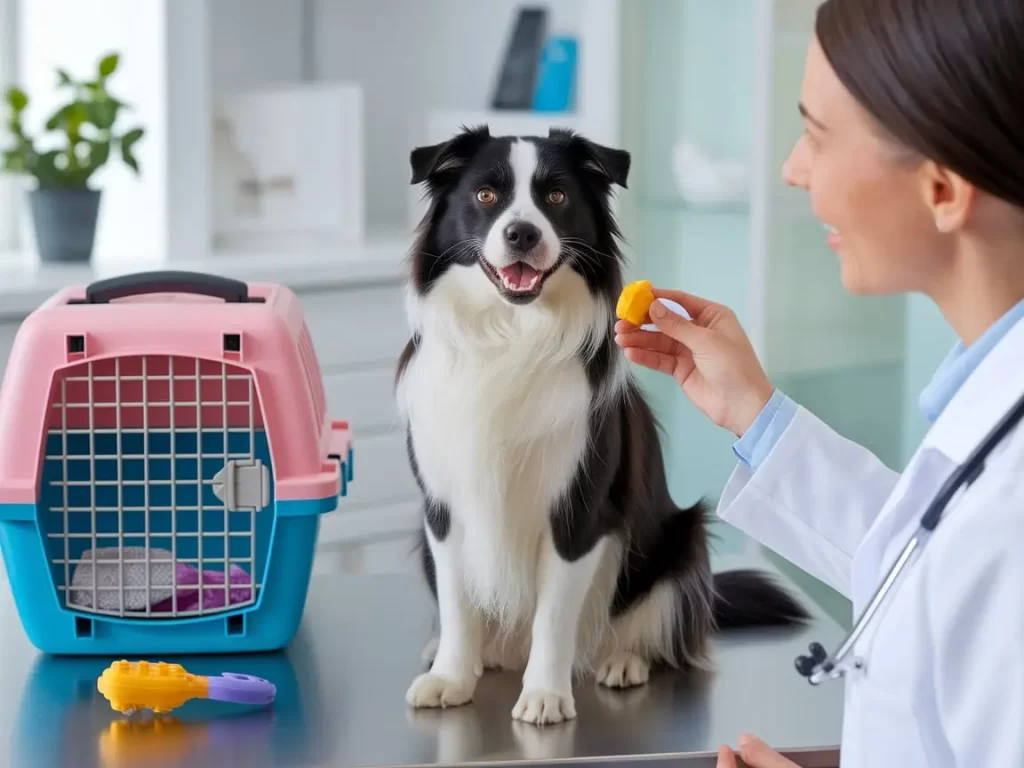
Omar used to dread vet day almost as much as his dog Rocky did. The moment the carrier came out, Rocky would bolt under the bed and refuse to budge, turning a routine checkup into a 20-minute wrestling match before they’d even left the house. It wasn’t until Omar’s vet suggested leaving the carrier out at home, just sitting in the living room with Rocky’s favorite blanket inside, that things started to shift. A few weeks later, Rocky was walking into it on his own.
Vet visits are hardly anyone’s idea of a fun day out, especially for pets. Some tolerate it fine, others turn into bundles of nerves the moment they spot a carrier or leash. But avoiding the vet isn’t an option if you want your pet to live a long, healthy life, and neither is skipping routine care like pet grooming in Abu Dhabi, which plays its own part in keeping your pet comfortable with handling. The good news is that with a little preparation, most vet visits can become far less stressful, for your pet and for you.
1. Normalize the Carrier or Leash
If your pet only sees the carrier or leash when it’s time for the vet, of course they’re suspicious of it. Keep the carrier out at home with a cozy blanket or favorite toy inside, and let your pet explore it freely so it becomes just another piece of furniture. Regular leash walks that end in treats, not a vet visit, can ease anxiety for dogs too. Familiarity is the real secret here.
2. Take Practice Trips
A common mistake is only ever driving pets to the vet. Instead, take short, no-pressure car rides now and then, around the block, through a drive-thru, or just parked somewhere quiet. This teaches your pet that car rides don’t always end at the clinic, which builds a more positive association over time.
3. Choose the Right Vet
Not every clinic suits every pet. Some are louder or more chaotic than others. Look for a vet experienced with your pet’s breed and known for a calm, patient approach, reviews from other pet owners are a good way to gauge this. Some clinics even offer separate entrances or waiting areas for cats and dogs.
4. Stay Calm and Confident
Pets pick up on your energy. If you’re anxious, they’ll likely be anxious too. Take a few deep breaths before the appointment, avoid frantic movements or high-pitched baby talk, and lead your pet through the visit with a steady voice and relaxed body language.
5. Reward and Praise Generously
This is the one time to go a little overboard with treats. Reward every small win, sitting calmly in the waiting room counts too. Over time, this builds a positive association that can outweigh the fear, and some pets genuinely start to look forward to the visit.
6. Bring Familiar Smells
Pets rely heavily on scent to read their environment. Bring a favorite blanket, toy, or an item of your own clothing to help your pet feel more secure. For dogs specifically, calming pheromone products, which mimic the scent of a nursing mother, can also help in a clinical setting.
7. Schedule Strategically
Timing matters more than most owners realize. Book appointments during quieter hours, and avoid weekends or peak times when the clinic is busiest. Morning slots tend to work best, your pet hasn’t had a full day to build up stress, and the vet is less likely to be running behind.
8. Practice Gentle Handling at Home
Don’t wait until the exam room to introduce touch. Practice lifting paws, touching ears, and gently opening the mouth at home, rewarding calmly afterward. This helps your pet recognize vet handling as just another version of a routine they already know.
9. Manage Their Appetite Beforehand
A heavy meal right before the visit can make treats less motivating. Try holding off their usual feeding by a few hours beforehand, mild hunger makes treats more effective for distraction and calm handling, without pushing it far enough to cause irritation.
10. Keep Up With Grooming Between Vet Visits
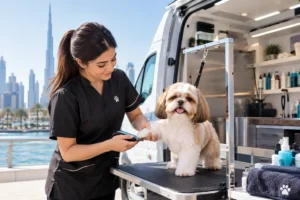
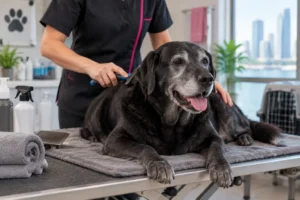
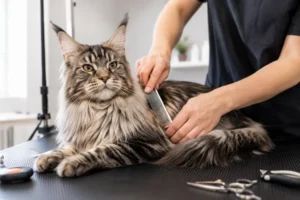
Grooming can’t replace veterinary care, only a vet can diagnose or treat health issues, but it plays a real supporting role. A pet that’s used to regular handling during grooming, paws touched, ears checked, coat brushed, tends to be more comfortable with the kind of physical handling a vet exam involves. Regular grooming also means fewer surprises for your vet, since a well-maintained coat makes it easier to spot skin issues or lumps early. If getting to a salon adds stress, mobile grooming in Abu Dhabi brings that same routine handling to your home instead.
Frequently Asked Questions
Can grooming appointments replace a vet checkup?
No. Grooming and veterinary care are different services done by different professionals. Groomers aren’t trained to diagnose or treat health conditions, though regular grooming can help your pet stay more comfortable with handling in general.
How far in advance should I start preparing an anxious pet for a vet visit?
There’s no strict timeline, but starting carrier training, handling practice, and car rides a few weeks ahead gives your pet time to build positive associations before the actual appointment.
Are calming pheromone products safe for all pets?
They’re generally considered safe for dogs, but it’s worth checking with your vet before using any calming product, especially for cats or pets with existing health conditions.
What if my pet is still terrified despite trying all of this?
Some pets need more support than home strategies alone can provide. Talk to your vet, some clinics offer sedation options or separate low-stress appointment protocols for particularly anxious pets.
Final Thoughts
Your pet doesn’t know a vet visit is for their own good, they just register the unfamiliarity and react to it. With patience and the right preparation, you can shift that reaction over time. Start small, stay consistent, and don’t underestimate the value of a well-groomed, well-handled pet walking into that exam room a little more at ease. At Nin9 Tails, our trained groomers in Dubai and Abu Dhabi work with nervous and resistant pets regularly, creating a calm environment that can make the next vet visit just a little easier too.