Noor almost skipped her cat Salem’s grooming appointment that week. He’d seemed a little tired lately, but at fourteen, she chalked it up to old age. It was her groomer who gently mentioned that Salem seemed to be breathing a bit harder than usual during the session, nothing dramatic, just enough to notice. That small comment sent Noor to the vet the next day, where Salem was diagnosed with early-stage heart disease. Caught that early, his treatment plan has kept him comfortable and active ever since.
Most cat owners think of grooming as hygiene and appearance, brushing out mats, trimming nails, keeping the coat neat. What often gets overlooked is that a grooming session is also one of the few times someone is closely, physically handling your cat on a regular basis. And because cats are so good at hiding illness, that hands-on time can matter more than people realize.
Why Cats Hide Illness So Well
In the wild, showing weakness makes an animal a target, so cats have evolved to mask discomfort until a condition is fairly advanced. Heart disease is one of the more common examples of this. It’s sometimes called a “silent” condition because the outward signs are easy to miss, especially in the early stages, and especially at home where you see your cat every day and small changes creep up gradually.
Common Signs of Heart Disease in Cats
Heart disease can look different from cat to cat, but these are the signs worth watching for:
- Labored or rapid breathing
- Lethargy or a noticeable drop in activity
- Loss of appetite or unexplained weight loss
- Coughing or open-mouth breathing
- A swollen abdomen, which can indicate fluid buildup
- Fainting or collapsing episodes
- Pale or bluish gums
- Sudden hind-limb weakness, which can signal a blood clot and needs urgent care
If you notice any of these, especially fainting, bluish gums, or sudden limb weakness, get your cat to a vet right away. These can indicate an emergency.
Where Grooming Actually Fits In
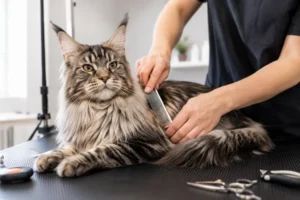
To be clear: groomers aren’t vets, and grooming isn’t a diagnostic tool. A professional groomer can’t detect heart disease or feel a heartbeat irregularity the way a vet with a stethoscope can. What grooming does offer is regular, close contact with your cat, which means a groomer may notice things an owner sees every day and stops registering: labored breathing during handling, a coat that’s stopped being maintained through self-grooming, unusual lethargy, or weight loss.
That’s exactly what happened with Salem. The groomer didn’t diagnose anything, she simply noticed something off and said so. That’s the real value: an extra set of attentive eyes on your cat, often noticing small changes before you do.
At many cat grooming Abu Dhabi salons, groomers also keep informal notes on a cat’s coat condition, weight, and general behavior across visits, which can make it easier to spot a gradual change over time.
There’s a Stress Side to This Too
Grooming also plays a smaller but real role in reducing stress, particularly for anxious or long-haired cats who struggle to keep up with self-grooming. A cat that’s physically comfortable, free of mats, overgrown nails, or matted fur pulling at the skin, tends to be calmer overall. Chronic stress isn’t good for any animal’s health, so keeping your cat comfortable is a reasonable piece of the bigger picture, even if it’s not a direct treatment for heart conditions.
Finding the Right Grooming Environment
Quality, low-stress grooming makes this kind of early awareness more likely, since a rushed or stressful session gives a groomer less chance to notice anything. If you’re looking for cat grooming Dubai services, many salons now offer wellness-focused sessions that include coat and nail checks alongside the usual grooming. Outside the city, cat grooming Al Ain offers similarly personalized, low-stress options for cats of any age.
Supporting Your Cat’s Heart Health at Home
Grooming is one piece of the picture, not the whole thing. A few habits make the biggest difference:
- Keep up with vet checkups. Annual or bi-annual exams remain the actual way to catch heart disease early, through listening to the heart, imaging, and bloodwork.
- Encourage moderate activity. Regular play supports overall cardiovascular fitness.
- Know the warning signs. Don’t dismiss changes in breathing, energy, or appetite as “just aging.”
- Stay consistent with grooming, whether at home or with a professional, so your cat stays comfortable and you (or your groomer) have a better chance of noticing when something’s off.
Frequently Asked Questions
Can a groomer diagnose heart disease in cats?
No. Only a veterinarian can diagnose heart disease, typically through a physical exam, imaging, or bloodwork. A groomer may notice signs worth mentioning, but that’s not a diagnosis.
Is heart disease common in cats?
It’s one of the more common conditions in aging cats, and because early symptoms are subtle, many cases aren’t caught until they’ve progressed. Regular vet visits are the best way to catch it early.
What should I do if I notice my cat breathing heavily?
If it’s sudden, severe, or paired with other symptoms like pale gums or collapse, treat it as an emergency and get to a vet immediately. If it’s mild but ongoing, book a vet visit to check it out.
Does grooming actually improve heart health?
Not directly. Grooming doesn’t treat or prevent heart disease. What it can do is reduce stress and physical discomfort, and give an attentive groomer a chance to notice changes worth flagging to your vet.
Conclusion
Heart disease in cats can be hard to catch early, and that’s exactly why every extra set of eyes matters. Grooming isn’t a substitute for veterinary care, but it is a regular, hands-on touchpoint that can help catch small changes before they become bigger problems. Combine it with regular vet checkups and you’ve got a genuinely well-rounded approach to keeping your cat’s heart, and the rest of them, healthy.