
Fatima grew up loving cats but always assumed she just wasn’t a “pet person,” since being around them left her sneezing and itchy-eyed within minutes. When her kids convinced her to get a family dog instead, she braced for the same reaction. It never came. She could sit with the dog on her lap for hours with barely a sniffle. Confused, she finally asked her allergist why one bothered her so much and the other didn’t. The answer surprised her: cat and dog allergies aren’t actually the same thing at all.
It’s a common mix-up. Many pet lovers dream of having both cats and dogs at home, but allergies often get in the way, and most assume all “pet allergies” work the same. They don’t. While the symptoms can feel similar, sneezing, itchy eyes, breathing trouble, the source of the allergens and how to manage them are quite different. In this guide, we’ll break down what causes cat and dog allergies, why cats tend to trigger stronger reactions, and how grooming, including sessions at our cat grooming Dubai and dog grooming Dubai locations, can help keep your home more comfortable.
What Actually Causes Pet Allergies?
It isn’t the fur itself that triggers a reaction, it’s specific proteins found in:
- Dander (dead skin flakes)
- Saliva
- Urine
- Sebaceous (skin oil) glands
When a pet sheds, licks itself, or uses the litter box or yard, these proteins spread through the air and settle onto surfaces, where sensitive people can react to them.
Cat vs Dog Allergies: What’s Actually Different
Cats and dogs each produce their own distinct allergenic protein, and they don’t behave the same way once released into your home.
Cat allergies are caused mainly by a protein called Fel d 1, produced in a cat’s saliva, skin, and sebaceous glands. It’s extremely lightweight and sticky, clinging to clothing, furniture, and soft surfaces, and it can stay airborne for hours after a cat has been in the room. This is part of why cat allergen shows up even in homes that have never had a cat.
Dog allergies come mainly from a protein called Can f 1, found in a dog’s saliva, dander, and urine. It also becomes airborne, but it tends to settle out of the air faster and is usually found in lower concentrations indoors than cat allergen.
Because these are structurally different proteins, your immune system responds to them independently, which is exactly why someone like Fatima can react strongly to cats but barely at all to dogs.
How Grooming Helps Reduce Allergen Exposure
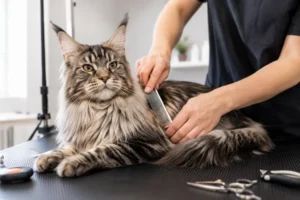
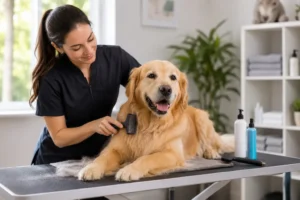
Since dander, saliva, and loose fur are the main carriers of these allergens, regular grooming is one of the most effective ways to cut down on how much ends up in your home. At our cat grooming Dubai and dog grooming Dubai locations, our team follows allergy-aware grooming practices designed to reduce dander and remove allergens before they spread. This is especially useful for cat owners, since Fel d 1 is harder to control without consistent grooming, thanks to how sticky and airborne it is compared to dog allergen.
Here’s how a regular grooming routine helps:
- Regular baths remove built-up saliva and dander from the coat
- Deshedding treatments reduce the loose fur that carries allergens around your home
- Skin conditioning helps prevent the dryness and flaking that create more dander in the first place
- Brushing and combing physically remove allergens trapped in the coat before they spread further
If leaving the house isn’t ideal, whether because of your own allergies or a busy schedule, our mobile grooming Dubai service brings a fully equipped van straight to your door, so your pet gets groomed in a familiar space while you avoid unnecessary exposure.
Managing Pet Allergies at Home
Alongside professional grooming, a few home habits go a long way:
- Keep pets out of bedrooms and off furniture where possible
- Use a HEPA air purifier to reduce airborne allergens
- Vacuum regularly with a pet-specific vacuum
- Wash pet bedding weekly
- Wipe your pet’s coat with hypoallergenic pet wipes between grooming sessions
For most people, these habits combined with regular grooming make a noticeable difference. If your symptoms are severe or persistent despite these steps, it’s worth speaking with an allergist, since they can help identify exactly what you’re reacting to and discuss options beyond home management.
Frequently Asked Questions
Why are more people allergic to cats than dogs?
Cat allergen (Fel d 1) is lighter, stickier, and stays airborne longer than dog allergen (Can f 1), which is why cat allergies tend to be more common and more severe.
Can I be allergic to cats but not dogs, or the other way around?
Yes. Since Fel d 1 and Can f 1 are structurally different proteins, your immune system can react to one without reacting to the other at all.
Does grooming really reduce pet allergens at home?
Yes. Regular baths, brushing, and deshedding remove a significant amount of the dander and saliva residue that carry allergens, especially when done consistently.
Are certain cat or dog breeds allergy-free?
No breed is guaranteed allergen-free. Some may produce lower levels of certain proteins, but there’s no scientific guarantee a “hypoallergenic” breed won’t trigger a reaction in a sensitive person.
Final Thoughts
So, are cat and dog allergies the same? Not quite. They share overlapping symptoms, but the allergens behind them, and how easily they spread through your home, are genuinely different. Cats tend to produce a more persistent, airborne allergen, while dog allergen is heavier and settles faster. Whether you’re a cat person, a dog person, or hoping to be both, a consistent grooming routine is one of the most effective tools for making life with pets more comfortable, allergies included.