If you’ve ever watched your dog scratch, lick, and chew at themselves for the hundredth time in a day, you know how helpless it feels. You’ve tried changing their shampoo. You’ve washed their bedding. You’ve Googled “why is my dog so itchy” at midnight more than once.
Here’s the thing in Dubai and Abu Dhabi, skin allergies are one of the most common issues vets see in dogs. The desert dust, the constant air conditioning, and the sheer number of kibble options on the shelf all play a role. And for a lot of dogs, what’s in their food bowl is the biggest trigger of all.
The good news? The right kibble can make a genuinely huge difference. Let’s break it down in plain language.
Why Are So Many UAE Dogs Dealing With Skin Allergies?
It’s a fair question. Dogs all over the world get allergies, but a few things about life in the UAE make it more likely:
The dust is relentless:
Dubai consistently ranks among the dustiest cities in the world. That fine desert dust settles into your dog’s coat, irritates their skin, and builds up in your home no matter how often you clean. For a dog with sensitive skin, it’s a constant background trigger.
Air conditioning dries everything out:
Including your dog’s skin. A dog spending most of their day indoors in heavy AC is prone to dry, flaky, easily irritated skin which makes any existing allergy worse.
Food switches during relocation:
If you moved to the UAE with your dog, there’s a good chance you switched their food at some point either by necessity or because your usual brand wasn’t available here. Even a switch between two high-quality foods can trigger a reaction in a sensitive dog, especially if the new food uses a different protein source.
The most common food triggers? Chicken, beef, dairy, and eggs all incredibly common in standard kibble.
How to Tell If Your Dog Has a Skin Allergy
These are the signs to watch for:
- Constant scratching, licking, or chewingespecially at their paws, belly, and ears
- Red or irritated-looking skin patches
- Fur that’s thinning or falling out in patches
- Ear infections that keep coming back (this one surprises a lot of owners)
- Hot spots raw, moist patches that seem to appear out of nowhere
- A coat that looks dull, greasy, or just “off”
If you’re seeing a few of these together, diet is one of the first things worth looking at. And the sooner you act, the better repeated scratching can lead to skin infections that need antibiotics to clear up.
Choosing the Right Kibble; What to Look For (and What to Ditch)
This is where most owners get overwhelmed. Walk into any pet shop in Dubai and you’ll find an entire wall of options claiming to be good for sensitive dogs. Here’s how to actually read the label:
Skip these ingredients
Chicken, beef, dairy, eggs as the main protein: if your dog is reacting to food, these are the most likely culprits. They’re in the majority of standard kibbles, which is exactly why they’re such common allergens.
Wheat, corn, and soy, common fillers that add little nutritional value and are known to trigger reactions in sensitive dogs.
Artificial colours, flavours, and preservatives no nutritional benefit, and more ingredients for your dog’s immune system to potentially react to. Less is more.
Look for these instead
Novel proteins, this just means a protein your dog has never eaten before, so their immune system hasn’t had a chance to develop a sensitivity to it. Duck, venison, rabbit, kangaroo, and fish are the most popular options for allergic dogs.
Hydrolysed protein formulas, these take it a step further by breaking protein down into such tiny particles that the immune system can’t even recognise it. They’re often prescribed by vets for dogs with confirmed food allergies and are worth asking about.
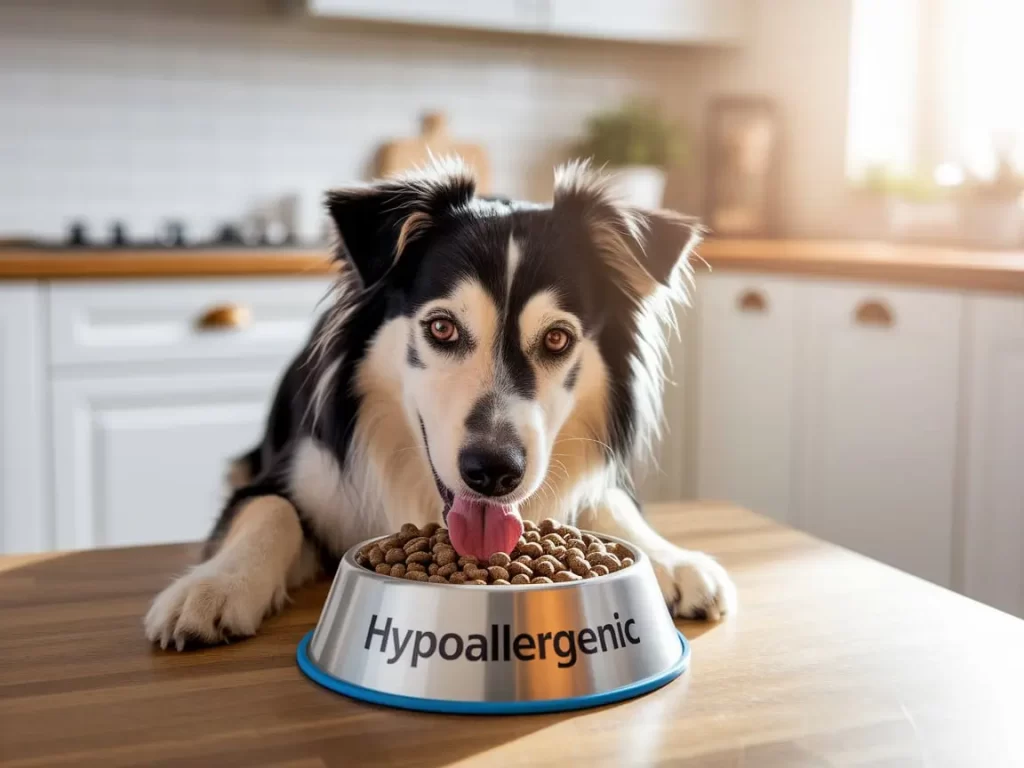
Limited ingredient diets (LID), exactly what they sound like. One protein, one carb (usually sweet potato, pea, or lentil), and not much else. Fewer ingredients means fewer things that could be causing the problem.
Omega-3 and Omega-6 fatty acids, these are brilliant for itchy dogs. They reduce skin inflammation and help the skin’s natural barrier work properly, so it can better defend against allergens. Look for salmon oil or fish meal on the ingredient list.
Don’t Forget Grooming Is Half the Battle
Changing the kibble handles what’s happening on the inside. But your dog’s skin is also being hit from the outside by dust, pollen, and environmental allergens that build up in their coat between baths.
Regular professional grooming removes all of that and gives a trained eye the chance to spot early skin changes before they turn into something more serious. For dogs with skin sensitivities, the products used during the bath matter just as much as how often it happens hypoallergenic, fragrance-free shampoos are a must. Regular shampoos can strip the skin’s protective barrier and actually make allergies worse.
Nin9tails’ mobile dog grooming in Dubai uses hypoallergenic, pet-safe products chosen specifically for sensitive skin, and their certified groomers know what to look for during every session. And if your dog gets stressed at traditional salons stress can actually worsen skin inflammation their mobile pet grooming in Dubai brings everything to your front door instead. No travel, no waiting rooms, no added anxiety.
As one happy client put it: “The van came to my house and groomed all my pets. All the pets smelled amazing. Definitely awesome.”
When to See a Vet
Diet and grooming changes fix a lot of mild allergy cases but not every case. If your dog hasn’t improved after six to eight weeks on a new food, or if you’re seeing open sores, significant hair loss, or any signs of infection, it’s time to get a vet involved.
A proper allergen test can pinpoint exactly what’s causing the reaction. In some cases, a short course of medication helps break the itch-scratch cycle so the skin can actually start healing before the dietary changes kick in.
Frequently Asked Questions
What is the best kibble for dogs with skin allergies in Dubai?
Look for limited ingredient kibble with a novel protein duck, venison, or fish work well for most allergic dogs in the UAE. Avoid chicken, beef, wheat, corn, and soy. Brands with hydrolysed protein formulas are also a strong choice, especially if symptoms are severe.
How long before I see improvement after switching my dog’s food in the UAE?
Most Dubai pet owners notice a difference within four to six weeks. Give it a full eight weeks before deciding whether the new kibble is working and keep treats consistent too, as hidden allergens in snacks can slow the process.
Can Dubai’s dust and heat make my dog’s skin allergies worse?
Yes. Desert dust, dry AC air, and seasonal pollen are major environmental triggers for dogs in Dubai. Even a perfect diet won’t fully resolve allergies if environmental exposure isn’t managed regular professional grooming helps remove allergens from the coat between baths.
How often should I groom my allergic dog in Dubai?
Every four to six weeks with a hypoallergenic shampoo is ideal.Dubai’s dusty environment means allergens build up in the coat faster than in cooler climates, so more frequent grooming than the standard recommendation genuinely helps.
Is grain-free kibble better for dogs with allergies in the UAE?
Not always. The protein source matters more than grain content. A limited ingredient diet with a novel protein and minimal ingredients grain-free or not is what actually makes the difference for most allergic dogs.
When should I take my itchy dog to a vet in Dubai?
If symptoms haven’t improved after eight weeks of dietary changes, or if you notice open sores, significant hair loss, or recurring ear infections, see a vet. A proper allergen test can identify the exact trigger and rule out secondary skin infections that need treatment.