
Persian cats need daily brushing, not occasional grooming, because their dense double coat mats within days if neglected. A consistent routine of daily brushing, baths every 4–6 weeks, daily eye cleaning, and the right tools keeps their coat healthy and prevents painful matting.
Ask anyone who’s owned a Persian, and they’ll tell you the same thing: that magnificent coat is basically a full-time job with a cat attached. A Persian’s fur is longer and denser than almost any other breed’s, sometimes up to two inches, and it doesn’t just tangle, it felts, knitting itself into tight mats against the skin if it’s skipped for even a few days. It usually catches new owners off guard. A Persian looks perfectly fluffy on Monday, and by the weekend there’s a mat forming behind the ear that seemed to appear out of nowhere. Those mats aren’t just unsightly. They pull at the skin, trap moisture and bacteria, and can hide sores that go unnoticed until they’re genuinely painful.
That’s exactly why Persians need daily grooming, not the occasional brush most cats get by on. The reassuring part is that once you have the right routine and tools, it becomes a quick, calm ritual rather than a battle, good for the coat, and good for the bond between you. Below are ten grooming tips, shaped by real hands-on experience with the breed, to keep your Persian’s coat healthy, shiny, and mat-free.
1. Brush Your Persian Cat Daily
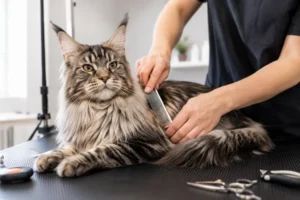
Persians need daily brushing because their thick fur tangles easily. A wide-toothed comb works well for detangling, while a slicker brush helps lift loose fur. Brushing also reduces hairballs and, over time, becomes one of the more bonding parts of caring for a Persian.
Consistency matters more than intensity here. A few focused minutes of daily brushing prevents the kind of deep, painful matting that takes far longer to fix once it sets in, and it’s a much easier habit to maintain than trying to catch up after several days of neglect.
2. Use the Right Grooming Tools
Having the right tools makes grooming noticeably easier and less stressful for both of you. Invest in:
- A wide-toothed comb for tangles
- A slicker brush for loose hair
- A dematting tool for stubborn knots
- A steel finishing comb for shine
The right tools prevent unnecessary pain and turn grooming into a more positive experience for your Persian, rather than something they start to dread.
3. Detangle with Care
Mats need to be handled gently, not yanked out. Break a mat into smaller sections and work it apart slowly, rather than pulling, which can genuinely hurt your cat and make them wary of future grooming sessions. A cat-safe detangling spray helps ease the process and reduces stress for a nervous or sensitive cat.
4. Schedule Regular Baths
Unlike short-haired breeds, Persians benefit from regular bathing every 4–6 weeks. A mild, cat-safe shampoo helps remove excess oils and dirt that build up in that dense coat. Thorough drying afterward matters just as much as the bath itself, since damp fur left to air-dry naturally tends to tangle right back up.
Many owners turn to mobile grooming in Abu Dhabi for this step specifically, since bathing and properly drying a Persian’s coat at home can be a genuinely time-consuming task. Bringing professional bathing and drying to your doorstep makes the whole process more convenient and noticeably less stressful for the cat.
5. Keep the Coat Trimmed
Trimming around the sanitary area helps prevent dirt buildup and keeps your cat more comfortable day to day. During hot months, some owners opt for a lion cut to reduce heat and matting altogether. A professional groomer can trim safely while still keeping the fur looking neat and breed-appropriate.
6. Clean the Eyes Daily
Persians often deal with watery eyes due to their flat facial structure. A cotton pad or pet-safe wipe, used daily, helps prevent staining, irritation, and infection around the eye area. It’s a small habit, but one that makes a visible difference over time.
7. Feed a Coat-Healthy Diet
A shiny, healthy coat starts with good nutrition. Omega-3 and omega-6 fatty acids, found in quality cat food, support both skin and coat health. Hydration matters just as much, so make sure fresh water is always available.
8. Watch for Skin and Coat Problems
While grooming, take a moment to check for dandruff, sores, or fleas hiding beneath that thick coat. Early detection means treating small issues before they become bigger ones. Owners often first notice something’s off when they spot signs their cat needs a grooming session, like new mats, dull-looking fur, or heavier shedding than usual.
9. Consider Professional Grooming
Even with a solid at-home routine, Persians benefit from professional grooming sessions. Groomers are trained specifically to handle heavy coats, remove stubborn mats safely, and provide trims without stressing the cat unnecessarily.
Specialized services like cat grooming in Abu Dhabi cater specifically to long-haired breeds, helping keep coats well-maintained while reducing stress for both cats and owners alike.
10. Keep Grooming Stress-Free
Patience and consistency matter more than technique here. Start sessions when your cat is calm, use gentle strokes, and reward cooperation with treats. Keeping grooming a positive experience, rather than a wrestling match, is what makes it sustainable long-term.
Bonus Tip: Build a Routine
Consistency is everything with Persians. Daily brushing, monthly baths, and routine checks become far easier once they’re built into a set schedule. Cats genuinely thrive on routine, and over time, your Persian may start to expect, and even enjoy, grooming time rather than resist it.
Frequently Asked Questions
How often should you groom a Persian cat?
Persian cats need daily brushing because their long, dense coat mats within days if neglected. Alongside daily brushing, most Persians benefit from a bath every 4–6 weeks, daily eye cleaning, and periodic trims. This routine prevents painful mats, reduces hairballs, and keeps the coat healthy, far more upkeep than short-haired breeds typically require.
What is the best brush for a Persian cat?
Use a combination: a wide-toothed comb to work through tangles, a slicker brush to lift loose fur, a dematting tool for stubborn knots, and a steel finishing comb for shine. Using the right tool for each job prevents pulling and pain, keeping your Persian’s coat smooth and mat-free.
How do you get mats out of a Persian cat’s fur?
Never pull a mat out directly. Break it into smaller sections and gently tease it apart with your fingers or a dematting tool, using a cat-safe detangling spray to ease the process. Work slowly to avoid hurting the skin. For mats that are tight and close to the skin, a professional groomer can remove them more safely.
How often should you bathe a Persian cat?
Every 4–6 weeks is ideal for most Persians. A mild, cat-safe shampoo helps remove excess oils and dirt that build up in their dense coat. Thorough drying afterward is essential to prevent fur from matting again as it dries. Bathing more often than needed can dry out the skin, so stick to a regular, spaced-out schedule.
Conclusion
Persian cats are beautiful, but their coats demand consistent, genuine commitment. Daily brushing, regular bathing, the right tools, and good nutrition all work together to keep the coat healthy and tangle-free.
Whether you lean on at-home routines or bring in professional support, maintaining a Persian’s coat is really about comfort, health, and the bond it builds along the way. By following these ten tips, you’ll keep your cat looking elegant while strengthening the relationship you share.
This article is written by a professional groomer with veterinary consultation. We recommend all Persian cat owners consult their veterinarian for health-related concerns. If you use professional grooming services, verify that groomers are properly certified and insured.