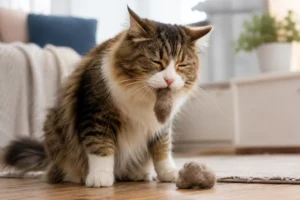

Cats purr for more than just happiness. It’s a form of communication, a self-soothing response to stress, and possibly even a healing mechanism. The vibration frequency of a purr falls in a range some researchers associate with tissue repair and bone healing, which is part of why purring happens even when a cat is in pain or afraid, not just when content.
I noticed this firsthand with a client’s cat, Whiskers, who purred steadily through an entire nail trim, a session she usually finds stressful. Her owner assumed it meant she was enjoying it, but her body language told a different story, ears back, tail tucked, muscles tense. That contrast is something I see often on the grooming table: purring isn’t a reliable sign of comfort on its own.
If you’ve ever curled up next to your cat and felt that soothing vibration hum through them, you’ve probably assumed it means they’re happy. Most cat owners do. But the truth is more layered than that, a cat sitting stiffly at the vet, clearly stressed, can purr just as loudly as one stretched out contentedly in a sunny window. It’s one of the more surprising things I point out to clients once they start paying closer attention: purring isn’t just an emotion, it’s a tool cats use for several different reasons, the same lesson Whiskers’ owner learned that day.
In this guide, we’ll explore the science, psychology, and surprising health benefits behind your cat’s rhythmic hum.
The Science Behind Purring
Cats create the purring sound through the repetitive contraction and relaxation of the laryngeal muscles, which causes rapid separation of the vocal cords. The vibration happens during both inhalation and exhalation, producing that familiar rolling sound.
- Frequency range: roughly 25 to 150 Hertz.
- Researchers have linked vibration frequencies in this range to processes involved in tissue and bone healing, which has led some scientists to theorize that purring may support a cat’s own recovery from injury.
- Interestingly, some big cats like cheetahs and cougars can purr, while lions and tigers typically cannot, due to differences in their throat anatomy.
Why Do Cats Purr? More Than Just Happiness
Contrary to popular belief, cats don’t purr only when content. The main reasons include:
1. Communication
Kittens begin purring within days of birth to signal to their mother that they’re safe and feeding. Adult cats often purr to bond with humans or other pets in the household.
2. Stress Relief
Cats also purr when nervous at the vet, during grooming, or in unfamiliar situations. It functions as a self-soothing mechanism, not necessarily a sign of comfort.
3. Healing and Recovery
Some researchers believe the therapeutic vibration frequencies involved in purring may support a cat’s recovery from illness or injury, though this remains an area of ongoing scientific interest rather than settled fact.
4. Requesting Attention
Ever notice your cat purring more insistently around mealtime? Cats sometimes use what’s been called a “solicitation purr” a higher-frequency variation that resembles the pitch of a human infant’s cry, which tends to be hard for people to ignore.
The Benefits of Purring for Humans
The calming effect of a cat’s purr often extends to the people around them too:
- Reduces stress: The steady, rhythmic sound has a naturally calming effect for many people.
- May support heart health: Some research has explored links between cat ownership and cardiovascular benefits, though more study is needed to draw firm conclusions.
- Improves sleep quality: Many owners report falling asleep faster with a purring cat nearby.
- Strengthens emotional bonding: Purring reinforces the sense of connection between cats and their owners.
How Purring Helps in Daily Cat Care
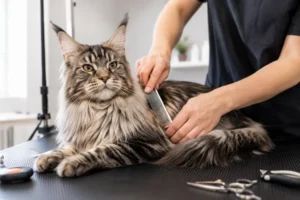
Understanding why cats purr can genuinely make daily care easier. During Cat Grooming in Dubai sessions, owners often notice their cat purring throughout. Some cats purr because they’re relaxed, while others do it to manage anxiety during handling. Learning to tell the difference helps pet parents recognize when their cat is truly comfortable versus just coping.
Mobile Grooming and Stress-Free Purring
Cats are sensitive to changes in environment, and a trip to a salon can be genuinely stressful for some. Many owners now choose Mobile Grooming in Dubai to avoid this. Keeping a cat in their familiar home environment often shifts their purring from a nervous coping response to a genuine sign of calm and trust.
Tip: If your cat is purring loudly during grooming, check their body language too. A relaxed posture usually signals real comfort, while tense muscles alongside purring can indicate stress instead.
Why At-Home Grooming Often Works Better for Cats
Cats generally do best in environments where they feel secure, which is part of why at-home grooming tends to suit them better than traditional salon visits. When cats stay in a familiar setting, their purring is more likely to reflect genuine relaxation rather than stress, which tends to make the whole grooming process smoother and less stressful for everyone involved.
Fun Facts About Cat Purring
- Cats don’t just purr for humans they also purr around other cats, sometimes as a way to reduce tension or signal non-aggression.
- Some cats purr while giving birth, which researchers believe may serve as a natural pain-management response.
- Unlike meowing, which cats mostly reserve for communicating with humans, purring is a broader, more universal feline behavior.
The Healing Power of Purring: What Research Suggests
- Pain relief: Low-frequency vibration from purring may act as a natural, mild pain-relief mechanism.
- Bone density: Some research suggests vibration at certain frequencies may support bone strength, which is part of why purring is sometimes theorized to aid recovery.
- Respiratory health: The rhythmic nature of purring may encourage steadier breathing patterns, contributing to overall relaxation.
Frequently Asked Questions
Do cats only purr when they’re happy?
No. Cats also purr when stressed, in pain, or seeking comfort. Purring is more accurately understood as a form of communication and self-soothing than a pure happiness signal.
Can purring actually help a cat heal faster?
Some researchers believe the vibration frequencies involved in purring may support healing processes like bone and tissue repair, though this is still an area of ongoing scientific interest rather than a fully settled finding.
Why does my cat purr loudly at the vet or during grooming?
This is usually a stress response rather than contentment. Purring can serve as a self-soothing mechanism in unfamiliar or uncomfortable situations.
Is it true that a cat’s purr can help calm humans too?
Many people find a cat’s purr genuinely calming, and some research has explored links between purring, relaxation, and stress reduction in humans, though individual experiences vary.
Conclusion
So, why do cats purr? The answer is more layered than most people expect. Cats purr to express contentment, manage stress, request attention, and possibly even support their own healing. What makes it even more interesting is that humans benefit too, both emotionally and, potentially, physically.
Whether you notice your cat purring during a cozy cuddle, a vet visit, or a grooming session, it’s worth remembering that the sound means something different depending on the moment, and paying attention to it can tell you a lot about how your cat is really feeling.