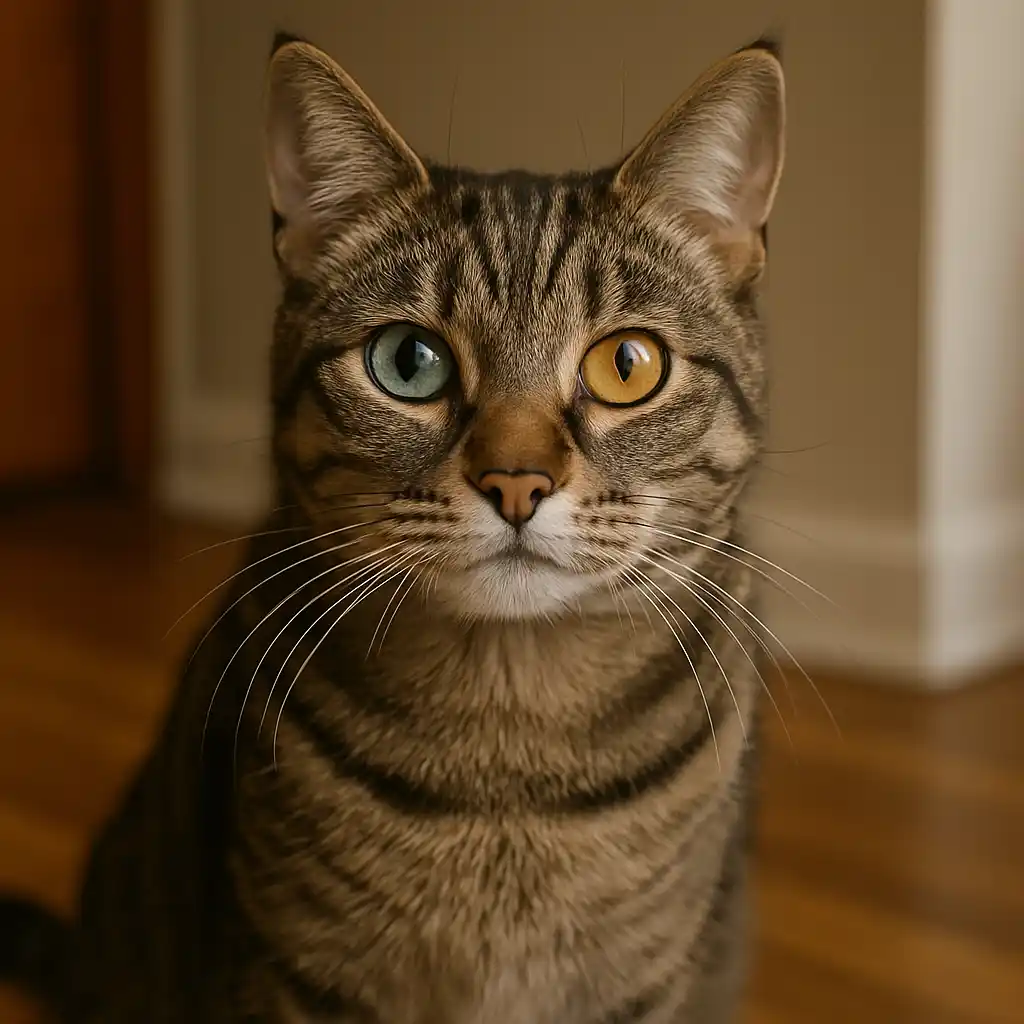
Yes, it’s completely normal for kittens’ eyes to change colour, usually shifting from blue to green, amber, or gold between 6–12 weeks of age. In adult cats, however, sudden or uneven colour changes can signal an underlying health issue and are worth a vet check.
It’s one of the more common surprises new kitten owners run into. A kitten brought home with striking blue eyes starts looking a little different a few weeks later, the blue softening into green, gold, or amber, and it’s easy to wonder if something’s wrong. At Nin9 Tails, this is one of the questions we get asked most during a kitten’s first few grooming visits. In most cases, it’s nothing to worry about. But the same question comes up just as often for adult cats, where an eye colour change usually isn’t part of normal development at all. Here’s how to tell the difference, and when it’s time to call the vet.
Natural Development in Kittens
Most kittens are born with blue eyes. As they grow, melanin develops in the iris, and their eye colour shifts, often to shades of green, amber, or gold. This change usually happens between 6–12 weeks of age and is a completely natural part of development. If your kitten’s eyes are changing gradually and both eyes look healthy, there’s no cause for concern.
When Colour Changes May Signal a Problem
Not all eye colour changes are harmless, especially in adult cats. Sometimes they point to an underlying health issue.
1. Infections
Conditions like conjunctivitis can cause redness, cloudiness, or unusual colour changes. Watch for symptoms like discharge or excessive blinking.
2. Inflammation
Uveitis, an inflammation of the inner eye, can make the iris look darker or uneven in colour. This condition needs veterinary treatment to prevent vision loss.
3. Injury
An eye injury can change pigmentation temporarily or permanently. Scratches or trauma to the eye should always be checked by a vet.
4. Underlying Disease
In rarer cases, conditions like glaucoma or certain tumors can alter eye colour. Early detection makes a real difference in treatment outcomes.
Practical Tips for Monitoring Your Cat’s Eyes
- Check regularly: Look at your cat’s eyes under good light about once a week.
- Compare both eyes: A change affecting only one eye is more likely to need urgent attention than a change affecting both evenly.
- Watch for other symptoms: Discharge, squinting, or swelling often accompany a real problem.
A pattern worth knowing: adult cats developing sudden cloudiness or redness alongside a colour change — especially in just one eye is one of the more common ways uveitis gets caught early. Acting quickly on a change like this, rather than assuming it’s normal, is often what leads to a full recovery.
Eye Health Is Part of Overall Grooming and Wellness
Eye health ties into general grooming and wellness more than most owners realize. Just as owners invest in Cat Grooming in Abu Dhabi to keep coats healthy, routine eye checks deserve the same attention. Groomers often spot early signs of irritation or discharge during sessions, making them a genuinely useful second set of eyes on your cat’s health between vet visits.
What Veterinary Guidance Says
Veterinary sources generally agree that while developmental colour changes in kittens are natural, sudden or uneven changes in adult cats can indicate illness. Conditions like uveitis or corneal damage are typically recommended to be treated promptly to avoid long-term vision problems, so a vet visit is the right move whenever a change looks abnormal rather than gradual.
If your cat needs extra support with grooming or general hygiene during recovery from an eye issue, Pet Grooming in Abu Dhabi can help keep them comfortable while healing.
Frequently Asked Questions
Is it normal for a kitten’s eye colour to change?
Yes, this is a natural part of development. Most kittens are born with blue eyes that shift to their permanent colour between 6–12 weeks of age.
At what age do a cat’s eyes stop changing colour?
Most cats have their permanent eye colour by around 3–4 months of age. Any noticeable change after this point is worth mentioning to your vet.
Can stress or illness change a cat’s eye colour?
Yes, in adult cats, illness or inflammation (like uveitis) can cause colour changes, cloudiness, or redness. Stress alone typically doesn’t change eye colour, but it can affect overall eye appearance.
Should I be worried if only one of my cat’s eyes changes colour?
Yes, a change affecting only one eye is more likely to indicate a localized issue like injury or infection, and it’s worth a vet visit sooner rather than later.
Curious About More Cat Traits?
Eye colour is just one of many fascinating things about cats. If you enjoy learning about your feline companion, our guide on Amazing Facts About Cats Every Owner Should Know covers more of what makes cats so unique.
Conclusion
So, do cats’ eyes change colour? Yes, in many cases it’s a completely normal part of growth, especially in kittens. However, sudden, uneven, or unusual shifts in adult cats can signal a health issue that needs professional care. Staying observant, scheduling regular check-ups, and trusting experienced vets are the best ways to protect your cat’s vision and overall health.