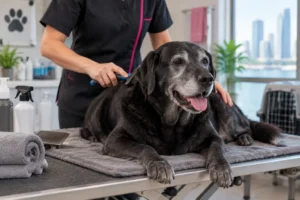

I remember a client’s Labrador, Rocky, coming in for a routine summer trim last July at our pet grooming in Dubai studio. He seemed a little slower than usual, but his owner brushed it off as tiredness from the heat. When I checked his gums during the session, they were tacky instead of wet, and when I gently pinched the skin near his shoulders, it took a few seconds too long to snap back into place. That’s not normal tiredness, that’s early dehydration, and it had been building quietly for a day or two without his owner noticing.
Stories like Rocky’s are common in the UAE, especially between May and September when daytime temperatures regularly climb past 45°C. In my years grooming dogs across the region, dehydration is one of the things I check for constantly during summer sessions, because dogs are often further along than owners realize by the time symptoms become obvious.
Dogs can’t tell you they’re thirsty the way we’d expect, and by the time panting alone doesn’t explain what’s going on, dehydration may already be affecting their organs. Here’s what I’ve learned to watch for, and what actually works to prevent it.
Early Signs of Dehydration in Dogs
The earliest signs are subtle, which is exactly why they get missed. Watch for:
Here’s the section with first-hand groomer experience woven into each point:
Dry or tacky gums:
Healthy gums feel slick and wet. Dehydrated gums feel dry, sticky, or slightly tacky to the touch. I check this on every summer grooming visit by lifting the lip for a couple of seconds, it’s one of the fastest ways to catch dehydration before a dog shows any other symptoms.
Loss of skin elasticity:
Gently pinch the skin at the back of your dog’s neck or shoulders. In a well-hydrated dog, it snaps back immediately. In a dehydrated dog, it stays tented or returns slowly. This is exactly the test I ran on Rocky that July, and the slow snap-back was the first real clue something was off.
Reduced energy or unusual lethargy:
A dog that suddenly seems uninterested in walks, play, or normal activity, especially in hot weather, is often dehydrated rather than simply “tired.” I’ve had owners tell me their dog is “just being lazy” more times than I can count, only for hydration checks to say otherwise.
Excessive panting that doesn’t settle:
Some panting is normal for cooling down, but panting that continues well after activity has stopped is a warning sign. On the grooming table, I always give a dog a few minutes to settle before judging their breathing, if it doesn’t slow down, that’s worth flagging to the owner right away.
Sunken eyes:
In moderate to severe dehydration, a dog’s eyes can appear noticeably sunken or dull. It’s subtle enough that owners rarely notice it themselves, but it’s one of the first things I look for on dogs coming in during peak summer months.
Quick Checklist: Signs You Should Act On Right Away
If you notice any of the following, don’t wait it out:
- Gums feel dry or tacky rather than wet
- Skin doesn’t snap back within 1-2 seconds when gently pinched
- Your dog refuses water or hasn’t had any in several hours during peak heat
- Panting continues well after rest and shade
- Your dog seems unusually withdrawn, wobbly, or disoriented
Why UAE Heat Makes Dehydration Happen Faster Than Owners Expect
Dogs regulate heat mainly through panting, not sweating, which makes them far more vulnerable to fluid loss in extreme temperatures than humans. A short walk that feels manageable to us can push a dog’s body temperature and hydration levels much further, especially on hot pavement or during midday sun.
This is part of why we recommend adjusting grooming and outdoor routines seasonally. Our guide on why summer grooming matters for pets in the UAE heat covers how a properly maintained coat actually helps regulate body temperature rather than trapping heat, something owners often get backwards. And if you’ve ever wondered whether shaving your dog down for summer would help with the heat, our piece on whether shaving dogs in summer is safe or risky explains why that instinct can actually make dehydration and overheating worse for many breeds.
What to Do If You Notice These Signs
If you catch mild dehydration early, offering fresh water in a calm, quiet space and moving your dog indoors or into shade is usually enough to help them recover within an hour or two. Avoid forcing large amounts of water at once, small, frequent sips work better than one big bowl.
If your dog shows signs of moderate to severe dehydration, sunken eyes, extreme lethargy, vomiting, or skin that doesn’t bounce back at all, contact your vet immediately. Severe dehydration can affect kidney function and requires professional treatment, sometimes including IV fluids.
Preventing Dehydration During UAE Summers
A few habits make a real difference, and I recommend all of these to clients during summer grooming visits:
- Keep fresh water available at all times, and consider adding a second bowl in a shaded outdoor area if your dog spends time in the garden.
- Walk during early morning or late evening hours, avoiding the midday sun entirely between roughly 11 AM and 5 PM.
- Keep your dog’s coat properly maintained rather than shaving it down, since a well-groomed coat helps regulate temperature more effectively than bare skin exposed to direct sun.
- Watch water intake closely on grooming days or after any outdoor activity, since dogs often don’t drink enough on their own during or right after exertion.
If you’re ever unsure whether your dog’s coat or grooming routine is helping or working against them in the heat, our team at Mobile Grooming in Dubai can assess your dog’s specific coat type and recommend a summer-appropriate routine.
Frequently Asked Questions
How can I tell if my dog is dehydrated without a vet?
Check for tacky gums, slow skin elasticity when gently pinched, and unusual lethargy. These three signs together are a strong indicator, though a vet visit is recommended if symptoms persist.
How much water should a dog drink per day in UAE heat?
Generally, dogs need about 50 to 60 ml of water per kilogram of body weight daily, though this increases with heat, activity, and panting.
Can dehydration in dogs be dangerous?
Yes. Left untreated, dehydration can affect kidney function and lead to more serious complications, especially in puppies, senior dogs, or dogs with existing health conditions.
Does shaving my dog help prevent dehydration in summer?
Not necessarily. For many double-coated breeds, the coat helps regulate temperature and protect against sun exposure. Shaving can sometimes increase heat absorption and dehydration risk instead of reducing it.
Are some dog breeds more prone to dehydration in the heat?
Yes. Brachycephalic breeds like Bulldogs and Pugs, along with thick-coated breeds not adapted to heat, are generally at higher risk and need closer monitoring during UAE summers.