Natural tick prevention for cats includes regular combing with a fine-toothed comb, coconut oil massage, keeping outdoor areas trimmed, and frequent bedding washes. Avoid essential oils and citrus-based remedies, as many are unsafe for cats. Natural methods work best alongside, not instead of, veterinary care.
Ticks are more than just pests. They can spread disease, cause skin irritation, and make life genuinely uncomfortable for your cat. While veterinary treatments are effective, many pet owners also want safe, natural remedies to use alongside professional care. If you’ve ever searched for how to get rid of ticks on cats naturally, you’re far from alone.
In the UAE, warm weather creates ideal conditions for ticks year-round, which makes regular checks and prevention especially important. Alongside professional services like pet grooming in Dubai, natural methods can help reduce infestations and keep your cat healthy and comfortable.
Understanding Ticks on Cats
Ticks are small, blood-feeding parasites that attach to a cat’s skin. They’re especially common in outdoor cats, or those living in villas with gardens in Dubai or Abu Dhabi. If not removed quickly, ticks can:
- Cause anemia in severe infestations
- Lead to tick-borne diseases
- Irritate the skin, causing scratching or infection
Home Remedies to Remove and Prevent Ticks
1. Apple Cider Vinegar Spray
Apple cider vinegar is a commonly used natural tick deterrent.
- Mix equal parts apple cider vinegar and water in a spray bottle.
- Lightly mist your cat’s fur, avoiding the eyes and ears.
- Repeat 2–3 times a week.
2. Coconut Oil Massage
Coconut oil can help suffocate ticks and soothe irritated skin.
- Warm a small amount between your hands.
- Gently massage into affected areas.
- Leave on for about 20 minutes, then wipe off excess oil.
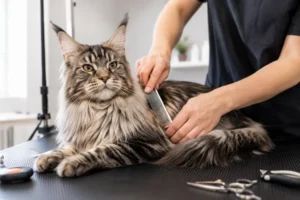
3. Regular Grooming with a Fine-Toothed Comb
Manual removal remains one of the most effective and safest methods.
- Use a fine-toothed comb to check for ticks daily, especially after outdoor time.
- Dip the comb in soapy water to kill any ticks caught during combing.
This is genuinely one of the safest and most reliable methods on this list, since it involves no products at all — just consistency.
A Note on Lemon Rinses and Essential Oils
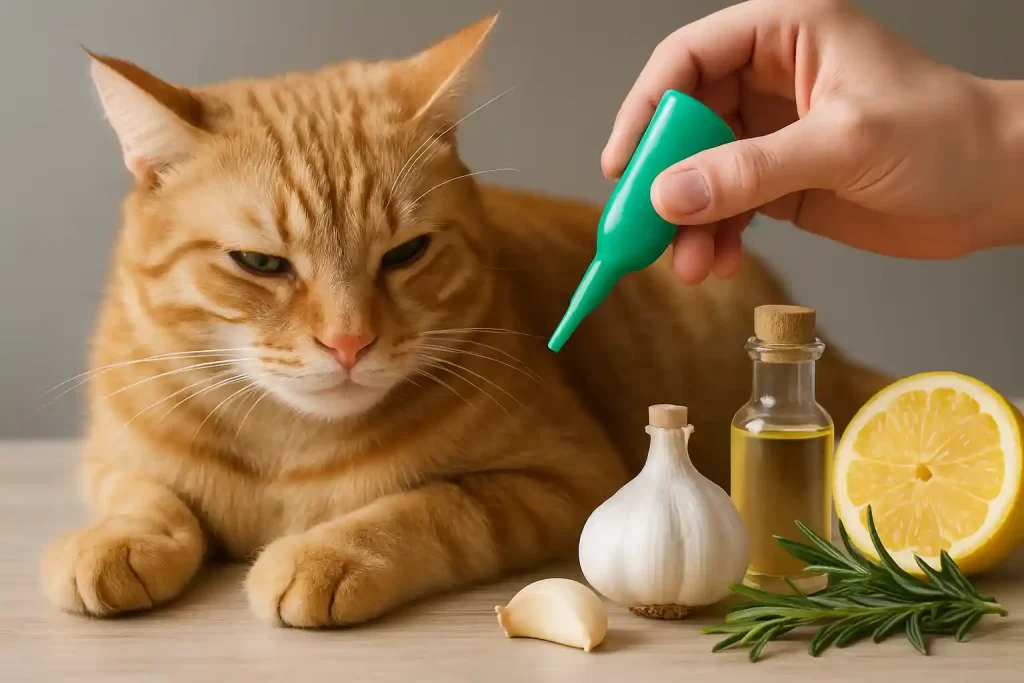
You may see lemon rinses or essential oils like neem and lavender recommended online as natural tick repellents. We’d caution against both. Citrus, including lemon, can be irritating or mildly toxic to cats, and cats process essential oils very differently from humans or dogs many oils that are considered “natural” are actually unsafe for feline use, not just tea tree oil specifically. If you want to try any plant-based repellent, always check with your vet first rather than assuming “natural” means “cat-safe.”
Tips to Keep Your Cat Tick-Free Naturally
- Inspect regularly: Check ears, neck, and between the toes after outdoor activity.
- Wash bedding frequently: Ticks often hide in blankets or pet beds.
- Vacuum thoroughly: A clean home reduces the chance of ticks multiplying indoors.
- Keep the environment tidy: Trim grass and shrubs around villas, where ticks tend to thrive.
- Support your cat’s immunity: A healthy diet helps strengthen natural resistance to parasites.
Owners who combine daily combing with coconut oil massages often see a noticeable drop in tick activity within a couple of weeks, especially when paired with a cleaner outdoor environment. From there, folding in professional cat grooming in Dubai sessions helps maintain that protection long-term.
When to See a Vet
Natural remedies help, but professional care becomes necessary when:
- The infestation is severe
- Your cat shows signs of illness like lethargy, fever, or pale gums
- Home remedies aren’t reducing the problem
Vets may recommend safe topical or oral treatments designed specifically for cats. Combining professional guidance with natural methods gives you both immediate relief and longer-term protection.
Frequently Asked Questions
Are natural tick remedies as effective as vet-prescribed treatments?
Natural remedies can help with prevention and mild cases, but they’re generally not as fast-acting or reliable as vet-prescribed treatments for active or severe infestations.
Is coconut oil safe for cats?
Yes, coconut oil is generally considered safe for topical use on cats in small amounts, though it should be wiped off after use to avoid your cat ingesting too much while grooming themselves.
Can I use essential oils to repel ticks on my cat?
It’s best to avoid essential oils on cats altogether unless specifically approved by your vet. Cats metabolize many essential oil compounds poorly, which can lead to toxicity even with oils considered safe for dogs.
How often should I check my cat for ticks in the UAE?
Daily checks are recommended during warmer months, especially for cats with outdoor access, since the UAE’s climate supports tick activity year-round.
Conclusion
Learning how to get rid of ticks on cats naturally gives UAE cat owners safe, practical tools to protect their pets. Methods like apple cider vinegar spray, coconut oil massages, and consistent combing can make a real difference when paired with regular grooming and a clean living environment.
Still, natural care isn’t a replacement for professional oversight. If infestations persist or your cat shows signs of illness, consult a vet right away. Prevention, awareness, and consistent grooming form the foundation of a healthy, tick-free life for your cat.