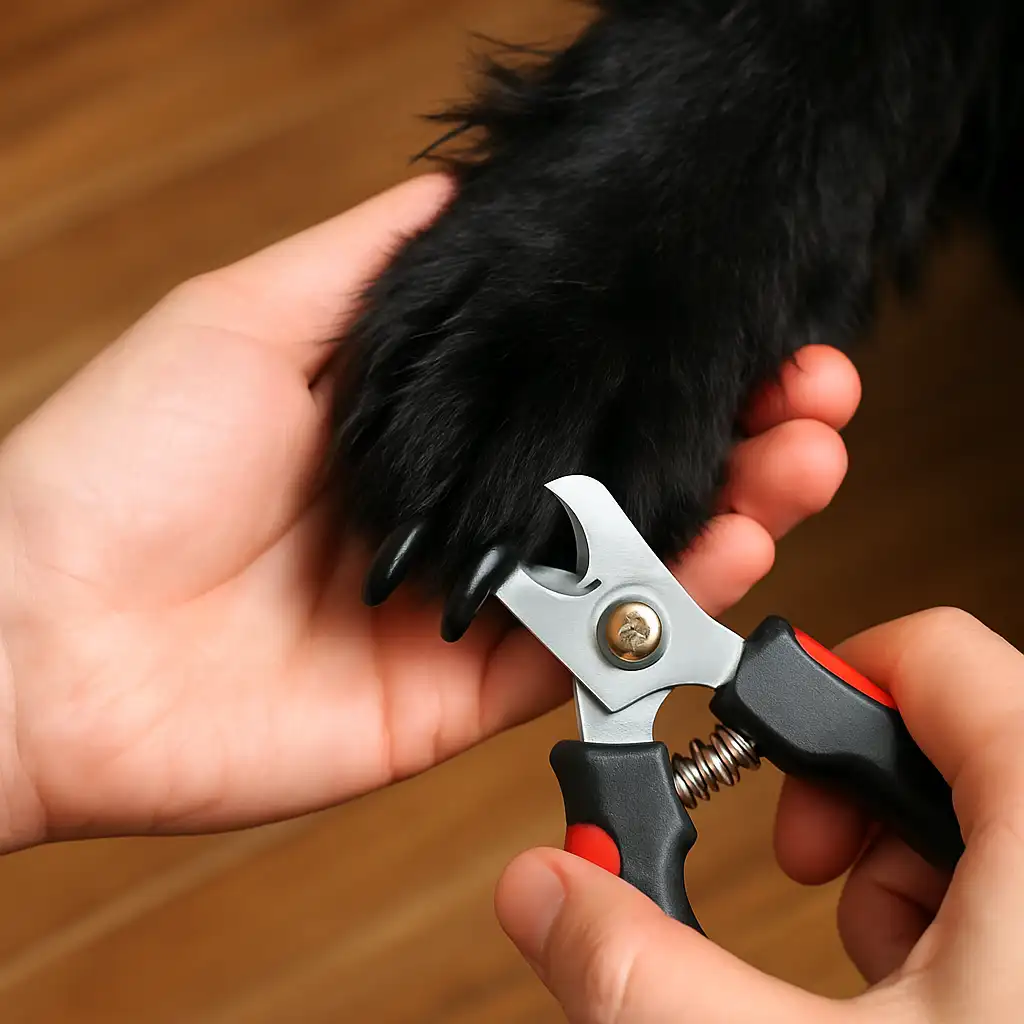
Trim black nails in small, 1–2mm sections, stopping as soon as you see a chalky white or grayish center appear inside the nail, which signals you’re close to the quick. Good lighting, patience, and going slow are the biggest factors in avoiding pain or bleeding.
Trimming a dog’s nails is a routine part of grooming, but black nails add a real layer of difficulty. Unlike clear nails, where the pink quick (the nail’s blood vessel) is easy to spot, black nails hide it completely, which is exactly why so many owners hesitate before picking up the clippers. One wrong cut, one moment of bleeding, and it’s easy to feel like you’ve set your dog’s trust in grooming back to zero.
That hesitation is understandable, but overgrown nails come with their own risks. Many vets note that consistently long nails can affect a dog’s posture over time and contribute to joint discomfort or mobility issues, which is part of why regular trimming matters for more than just appearance. This guide walks through safe techniques for trimming black nails with confidence, not guesswork.
Why Cutting Black Nails Is Risky
The biggest challenge with black nails is locating the quick before you cut it. Accidentally nicking it causes pain and bleeding, and a bad experience can make a dog noticeably more anxious about grooming going forward.
Key risks include:
- Bleeding from cutting the quick
- Pain that leads to fear or resistance during future sessions
- Secondary infection if a nick isn’t treated properly
Understanding the basic anatomy of a dog’s nail is the first step to minimizing mistakes.
Tools You’ll Need
- Guillotine or scissor-style clippers for precise cuts
- Nail grinder (Dremel-style tool) for smoothing edges
- Styptic powder or cornstarch to stop bleeding if the quick is nicked
- Good lighting to help spot the transition between nail and quick
Having these ready before you start makes the whole process safer and less stressful for both of you.
Step-by-Step: How to Cut a Dog’s Black Nails
- Get your dog comfortable: Choose a calm environment and place your dog on a non-slip surface to avoid sudden movements.
- Identify the nail structure: With black nails, trim slowly in small increments and watch for a chalky white or grayish center inside the nail this signals you’re getting close to the quick.
- Cut small sections: Trim just 1–2 millimeters at a time rather than taking large cuts.
- Check for signs of the quick: As you trim, the nail’s interior will start to show a darker, softer-looking spot. Stop cutting as soon as you see this.
- Smooth with a grinder: Grinding helps shorten and round off nails further without the risk of a sudden cut.
- Reward your dog: Positive reinforcement with treats helps keep grooming sessions low-stress going forward.
How Often Should You Trim?
Most dogs need nail trimming every 3–4 weeks. If you can hear clicking on hard floors, it’s already time for a trim. Dogs that walk on rough outdoor surfaces often wear their nails down naturally, while indoor dogs typically need more frequent trims.
Preventing Accidents
- Use gentle restraint, but avoid excessive force.
- Keep styptic powder within reach in case of bleeding.
- Work slowly, and pause if your dog seems stressed.
Even experienced groomers occasionally hit the quick. What matters most is staying calm and addressing bleeding quickly if it happens.
Grooming Services for Black Nail Care
Not every owner feels confident trimming black nails at home, and that’s completely reasonable. Dog Grooming in Dubai centers are trained specifically for delicate tasks like this, using specialized tools to keep the process safe and comfortable, even for anxious dogs.
Convenience of Mobile Grooming
For busy pet parents, Mobile Grooming in Dubai brings professional groomers directly to your home, which can meaningfully reduce stress for dogs that dislike salon visits. Mobile setups come equipped with the same grinders and clippers used in-salon, making black nail trims just as safe from home.
Full-Service Grooming Benefits
Grooming support goes well beyond nails. Pet Grooming in Dubai typically includes ear cleaning, coat brushing, and bathing, all of which support your dog’s overall hygiene. Groomers are also often the first to notice hidden issues, like early skin infections or paw injuries, during a routine visit.
Training Makes a Difference
Dogs that are used to being handled tend to be far easier to groom. Starting young with simple paw-handling exercises can make nail trims far less stressful over time. Consistent handling routines also support broader training goals, which is where resources on how to train a dog can help build a stronger foundation for grooming and everyday care alike.
What If You Accidentally Cut the Quick?
Even experienced owners occasionally clip too far. Here’s what to do:
- Stay calm dogs pick up on stress quickly.
- Apply styptic powder or cornstarch to stop the bleeding.
- Hold gentle pressure on the nail until bleeding stops, usually within a few minutes.
- Reward your dog afterward to help maintain trust.
If bleeding continues for more than 20 minutes, contact your vet right away.
Expert Tips to Reduce Fear
- Trim nails after exercise, when your dog is naturally calmer.
- Use desensitization training — touch and gently hold paws daily, even outside of grooming sessions.
- Pair trimming with high-value treats to build a positive association.
- Keep sessions short. Quality matters more than quantity here.
Frequently Asked Questions
How do I find the quick in a dog’s black nail?
Trim in small sections and watch the cross-section of the nail. A chalky white or grayish center appearing means you’re close to the quick stop cutting at that point.
What should I do if I can’t tell where the quick is at all?
When in doubt, trim very conservatively or leave black nail trimming to a professional groomer, who can spot subtle color changes more reliably with experience.
Is it normal for a dog to be afraid of nail trims?
Yes, especially if there’s been a past incident involving pain or bleeding. Gradual desensitization and positive reinforcement usually help rebuild comfort over time.
How long should I hold pressure if I cut the quick?
Usually a few minutes with styptic powder is enough to stop the bleeding. If it continues past 20 minutes, contact your vet.
Conclusion
Learning how to cut a dog’s black nails takes patience, the right tools, and a careful, unhurried approach. Trimming slowly, watching for signs of the quick, and rewarding calm behavior all help prevent pain and bleeding.
For owners in the UAE, professional options like Mobile Grooming Dubai, Pet Grooming in Dubai, and Dog Grooming Dubai offer safe, stress-free alternatives when at-home trimming feels like too much of a risk. Combined with consistent handling and training, regular nail care keeps your dog comfortable, mobile, and healthy for the long run.