
Quick answer: Some cats rarely or never purr due to genetics, personality, or simply their own way of expressing comfort. It’s usually nothing to worry about. But if a cat that used to purr suddenly stops, especially alongside other behavior changes, it’s worth a vet visit to rule out a health issue.
Purring is one of the most comforting, recognizable behaviors in cats. It usually signals contentment, relaxation, even trust. So it’s a little unsettling when your cat simply doesn’t do it, not occasionally, but seemingly ever. If you’ve caught yourself wondering “why does my cat never purr?”, you’re far from the only one.
This guide walks through the genetic, personality-based, and health-related reasons some cats rarely or never purr, plus how ongoing comfort and care, including professional cat grooming in Abu Dhabi, Dubai, and Al Ain, can support a cat’s overall mood and wellbeing either way.
1. Genetics: Not All Cats Are Wired to Purr
Some cats simply aren’t naturally frequent purrers. Genetics plays a real role in how vocally expressive a cat is, and certain breeds or bloodlines are known to communicate in quieter, less audible ways.
Cats that may purr less often include:
- Breeds with wild ancestry (like Bengals or Savannahs)
- More independent, less socially expressive breeds
- Cats from bloodlines with generally low vocal tendencies
Purring habits can be inherited, much like eye color or coat type. A cat that rarely purrs isn’t necessarily unhappy, they may just be genetically predisposed toward quieter forms of expression.
2. Personality: Quiet Doesn’t Mean Unhappy
Every cat has a distinct personality. Some are chatty and expressive, others are naturally calm and reserved. A cat that doesn’t purr often may simply show affection and trust in other ways instead:
- Rubbing their face against you
- Slow blinking
- Following you from room to room
- Choosing to sleep close by
These quieter signals go unnoticed a lot, but they carry just as much meaning as a purr does. Learning your own cat’s specific way of expressing affection is often more useful than expecting every cat to communicate the same way.
3. Health: When a Lack of Purring Needs Attention
Most quiet cats are simply naturally reserved, but a sudden stop in purring, especially in a cat that used to purr regularly, can sometimes signal a health issue. Cats are notoriously good at masking pain, so behavioral shifts are often one of the first real clues something’s wrong.
Health conditions that can affect purring include:
- Throat or voice box issues (laryngeal problems)
- Respiratory infections or asthma
- Pain or injury
- Stress or anxiety
- Neurological issues
If your cat used to purr but has stopped, particularly alongside signs like hiding, increased aggression, or appetite changes, it’s genuinely worth a vet visit rather than waiting it out.
The Role of Grooming in Stress Reduction
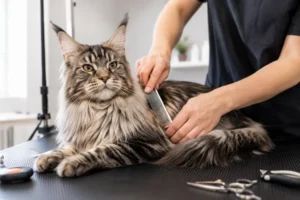
Cats are meticulous self-groomers, but even the most diligent among them benefit from outside help now and then. Professional mobile cat grooming in Dubai, Abu Dhabi, or Al Ain isn’t just about appearance, it plays a real role in comfort and stress reduction too.
Regular grooming helps with:
- Removing loose fur and preventing mats
- Reducing skin irritation and infection risk
- Lowering stress through calm, consistent, gentle handling
A comfortable, well-groomed cat tends to be more relaxed overall, and it’s not unusual for a cat to actually start purring during or after a good grooming session, sometimes for the first time in a while. If you’ve noticed other shifts alongside the lack of purring, like a change in coat condition or grooming habits, our guide on signs your cat needs a grooming session can help you figure out whether it’s time for extra attention.
Frequently Asked Questions
Is it normal for a cat to never purr at all?
Yes, some cats rarely or never purr due to genetics or personality, and it doesn’t necessarily mean anything is wrong. What matters more is whether the cat shows other signs of comfort and affection.
Why did my cat suddenly stop purring?
A sudden change, especially paired with other behavioral shifts like hiding or appetite changes, is worth checking with a vet, since it can sometimes point to pain, stress, or an underlying health issue.
Can stress cause a cat to stop purring?
Yes, stress and anxiety can affect purring, along with several other behaviors. Reducing stress through routine, comfort, and gentle care, including grooming, can sometimes help.
Do certain cat breeds purr less than others?
Yes, breeds with more wild ancestry, like Bengals or Savannahs, along with more independent breeds generally, tend to purr less frequently than others.
Final Thoughts
If your cat doesn’t purr, it’s not automatically something to worry about. Genetics, personality, and health all play a role in shaping this behavior. What matters most is that your cat feels safe, cared for, and genuinely healthy, purring or not.
With attentive observation, routine vet checkups, and consistent care through services like cat grooming in Abu Dhabi, Dubai, or cat grooming in Al Ain, you can help your cat thrive either way.