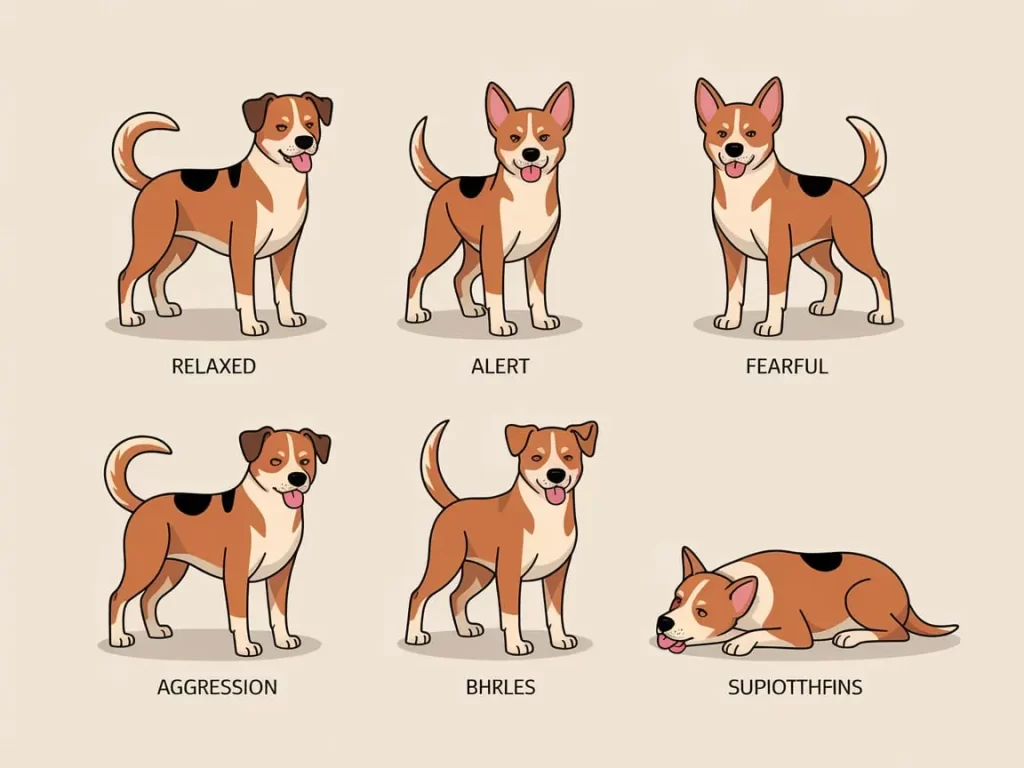
Dogs communicate constantly through tail position, ear movement, eye expression, and posture. A high fast wag signals excitement, while pinned ears, whale eyes, or a tucked tail usually signal stress or fear. Learning to read these cues helps you respond before anxiety builds, especially in new situations like vet visits or grooming.
Every dog is constantly trying to tell you something, just not with words. It’s in the flick of an ear, the set of the jaw, the way a tail sits low instead of high. Most owners pick up the obvious signals eventually, a wagging tail means happy, right? But the quieter cues are the ones that actually matter most, and they’re the ones that go unnoticed until a dog is already stressed rather than just starting to feel that way.
Learning this “silent language” isn’t just a fun party trick. It’s genuinely one of the most useful skills a dog owner can build, for trust, for preventing unwanted behavior, and for making sure your dog feels safe and understood in moments that might otherwise catch you off guard.
Tail Movements: What Your Dog’s Wag Is Telling You
The tail is usually the first thing people learn to read, and for good reason, it’s often the clearest signal a dog gives.
- A high, fast wag usually means excitement or alertness.
- A slow, low wag can signal uncertainty or submission.
- A tail tucked between the legs often points to fear or anxiety.
It’s easy to miss the difference between an excited wag and a nervous one if you’re not paying close attention, they can look deceptively similar at a glance. Dogs in unfamiliar environments, a vet clinic, a new grooming salon, often show anxiety through subtle tail changes long before anything more obvious happens. Catching that early is often the difference between a dog that settles in calmly and one that spirals into full-blown stress.
Ear Position and What It Reveals
Ears are another highly expressive feature, and their movement offers real insight into how a dog is feeling in the moment.
- Forward ears suggest alertness or curiosity.
- Pinned-back ears often mean nervousness or submission.
- One ear up, one ear down can mean your dog is unsure or processing mixed signals.
These cues are subtle, but they carry a lot of information. A dog stepping into a new room with ears pinned back and hesitant steps is often telling you, clearly, that it needs a little time and reassurance before diving in.
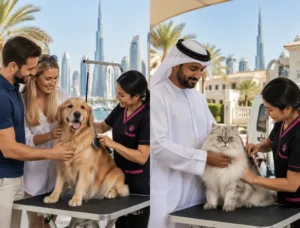
It’s worth watching for this during a pet grooming session in Abu Dhabi too. A dog with ears perked forward in curiosity is having a very different experience than one with ears tilted back in discomfort, and noticing that shift early can turn a stressful visit into a genuinely positive one.
Eye Contact and Expression
A dog’s eyes reveal more than most owners expect.
- Soft eyes with occasional blinking usually mean relaxation and calm.
- Staring, or widened eyes with visible whites (“whale eyes”), typically signal stress or unease.
Picture a dog playing happily at home, then suddenly flashing whale eyes the moment someone reaches for their favorite toy. That’s not random, it’s a clear signal, whether it’s about resource guarding or an unexpected noise nearby. These small moments add up to a much clearer picture of how a dog is actually experiencing their environment, not just how they look on the surface.
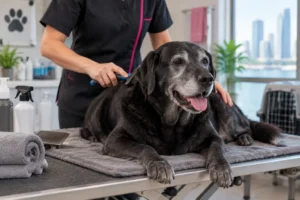
This becomes especially useful during a dog grooming visit in Dubai. Plenty of dogs show these eye-related stress signals the moment clippers or dryers come out, or when they meet a new groomer for the first time, and catching it early lets everyone adjust the pace accordingly.
Mouth & Facial Movements
The mouth offers another layer of information, one that’s often overlooked entirely.
- A relaxed jaw with the tongue out generally signals ease and comfort.
- A tightly closed mouth, repeated lip licking, or yawning can all be stress signals, even in situations that seem completely harmless on the surface.
During walks, at home, or when visitors come over, this kind of quiet “facial feedback” often shows up well before any more obvious behavior changes. It’s one of the easiest signals to miss simply because it doesn’t look dramatic.
Full Body Posture
Posture ties everything else together into one overall picture. Is your dog:
- Leaning forward, standing tall? Likely excited or alert.
- Crouching, or turning away? Likely feeling nervous or unsure.
The more time you spend actually watching for these signals, rather than just reacting after something’s already gone wrong, the better you get at responding supportively before a small moment of discomfort turns into a bigger behavioral issue.
That same awareness pays off during a dog grooming visit in Abu Dhabi too. Once you know what confident, relaxed posture looks like on your own dog, it becomes immediately obvious when they need a little extra reassurance instead.
Why This Matters
Understanding what your dog is communicating through body language genuinely changes day-to-day life with them. It helps you:
- Reduce unnecessary stress
- Prevent unwanted behaviors before they start
- Strengthen your overall bond
- Make everyday moments, from walks to vet visits, noticeably easier
Even something as routine as pet grooming in Dubai becomes smoother once you can recognize how your dog expresses comfort versus anxiety. And if you notice your dog consistently showing stress signals during grooming specifically, it’s worth reading through signs your dog needs immediate grooming, since physical discomfort (matting, skin irritation, overgrown nails) is sometimes the hidden cause behind behavior that looks purely emotional at first glance.
Frequently Asked Questions
How can I tell the difference between an excited wag and a nervous wag?
Speed and height matter here. A high, fast wag usually signals excitement, while a slow, low wag, especially paired with a lowered body, tends to indicate uncertainty rather than happiness.
What does it mean if my dog yawns a lot around new people?
Yawning outside of tiredness is a common stress signal in dogs. If it happens consistently around new people or unfamiliar situations, it’s usually a sign your dog needs a slower, gentler introduction.
Is it bad if my dog avoids eye contact with me?
Not necessarily. Dogs often avoid direct eye contact as a calming or submissive signal rather than a sign of distrust. Context, like overall posture and ear position, matters more than eye contact alone.
Can body language help during grooming or vet visits specifically?
Yes, significantly. Recognizing early stress signals, like ears pinning back or whale eyes, lets you or your groomer slow down and reassure your dog before anxiety builds into something harder to manage.
Conclusion
Mastering canine body language isn’t just a skill, it’s a genuine gateway to a deeper, more responsive relationship with your dog. The more fluent you become in reading tail position, ear movement, eye expression, and posture, the more naturally you’ll start anticipating what your dog needs, often before a single bark or whine tells you outright.